Animal Poetry
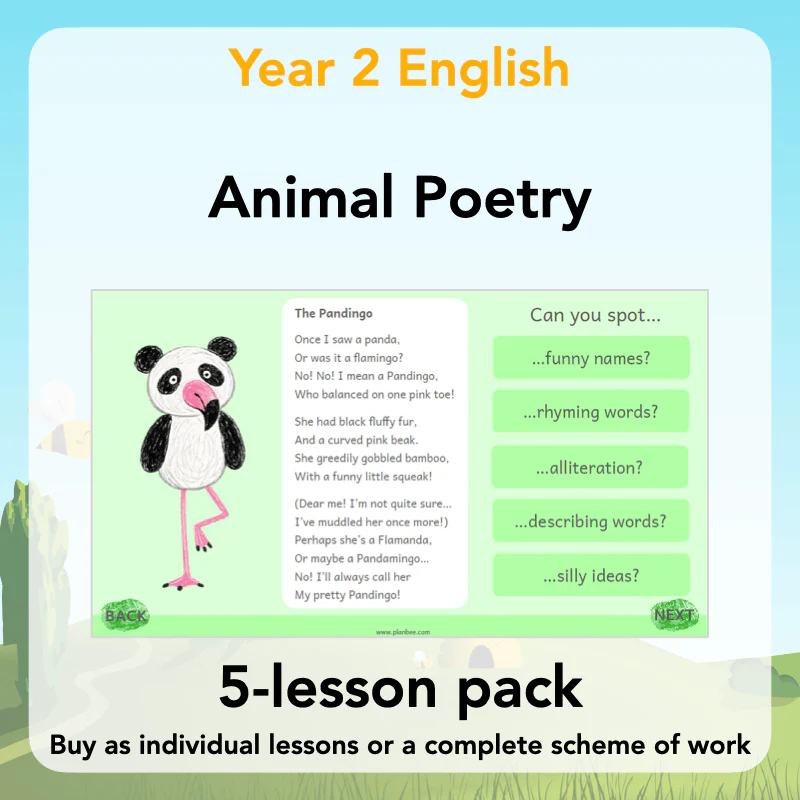
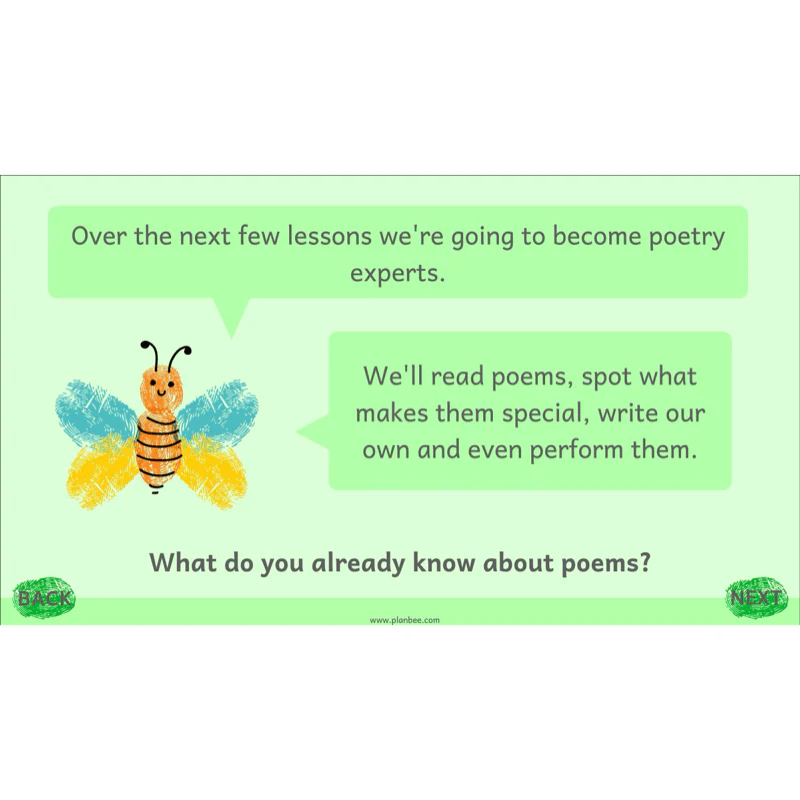
Over the course of five lessons, children begin by listening to, discussing and performing a humorous animal poem, before exploring the features that make funny poems enjoyable to read aloud and perform, including rhyme, alliteration and nonsense words. They then use these features to invent a funny animal, collecting vocabulary and ideas to plan their own poem. Using a familiar poem pattern, children write and improve their own humorous animal poem before rehearsing and confidently performing it to an audience, bringing together their reading, writing, speaking and listening skills.
Each of the lessons in this KS1 Poetry Pack come with a detailed plan, a set of engaging and informative PDF slides for the teaching input, differentiated activity ideas and a range of printable resources to support your children in their independent tasks.
Lesson 1: Performing a poem
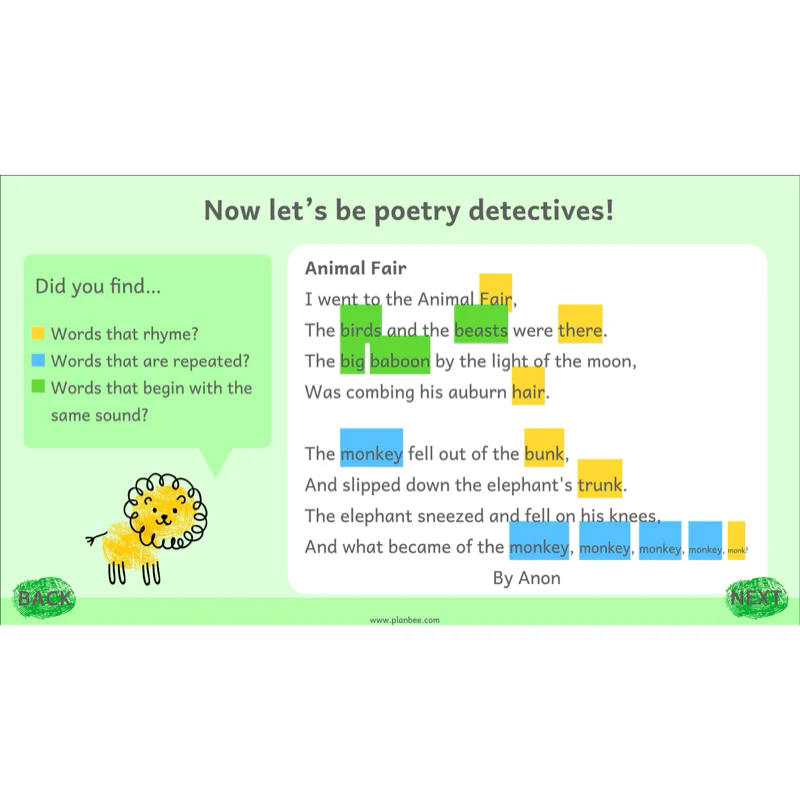
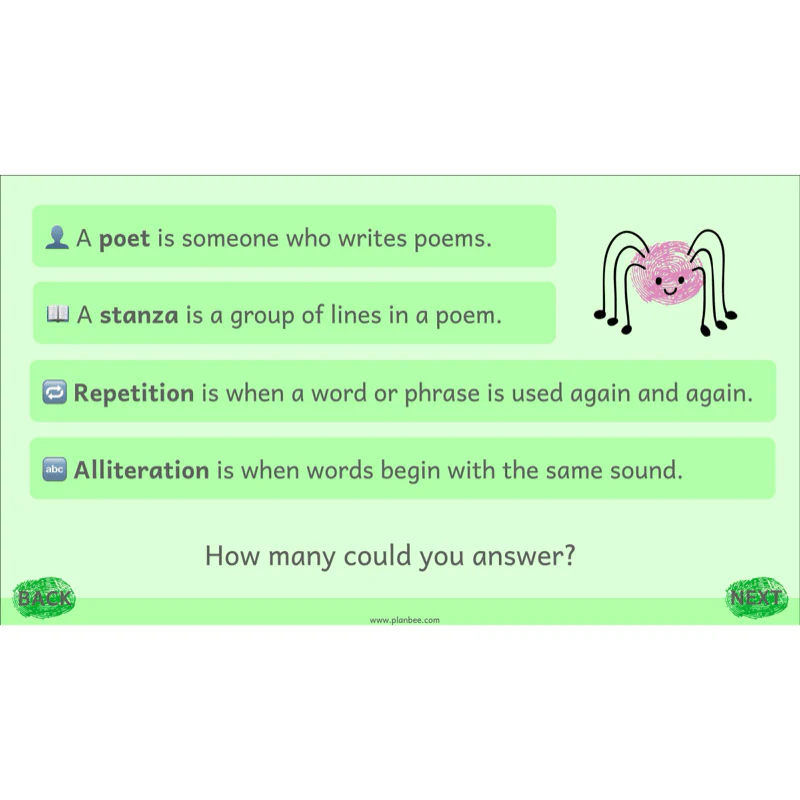
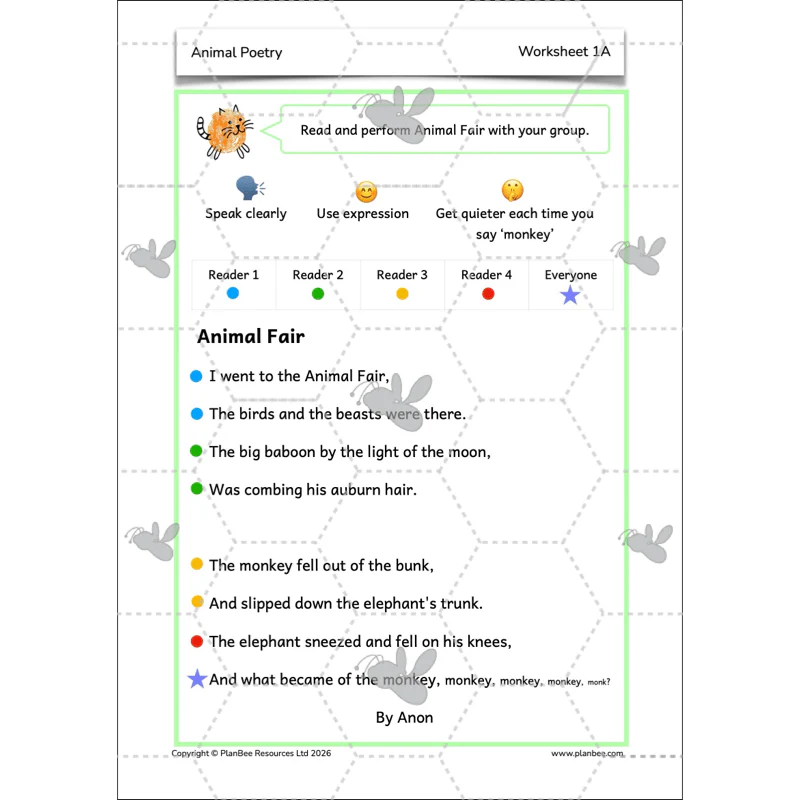
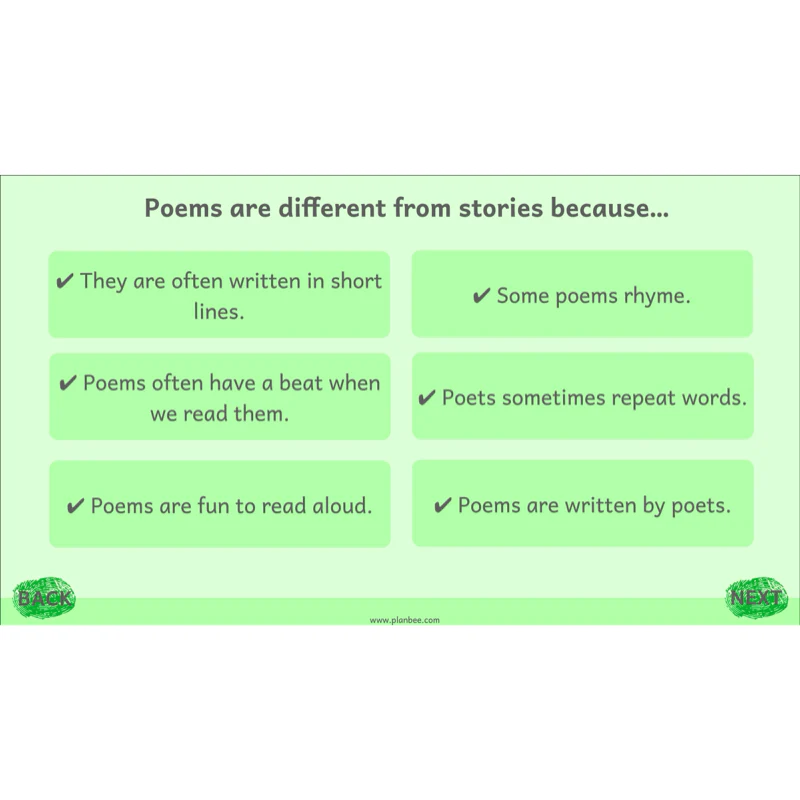
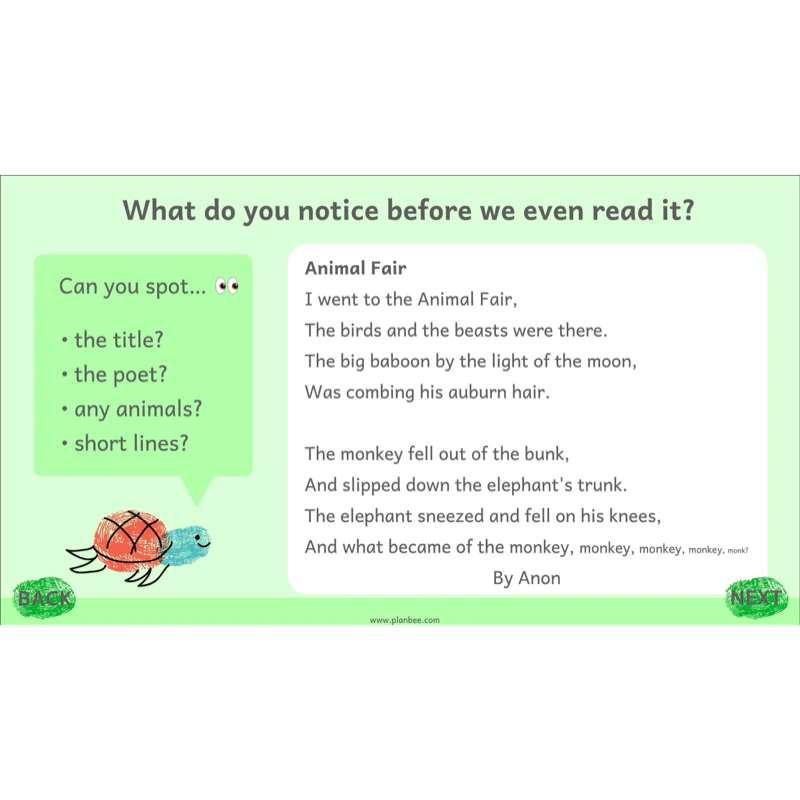
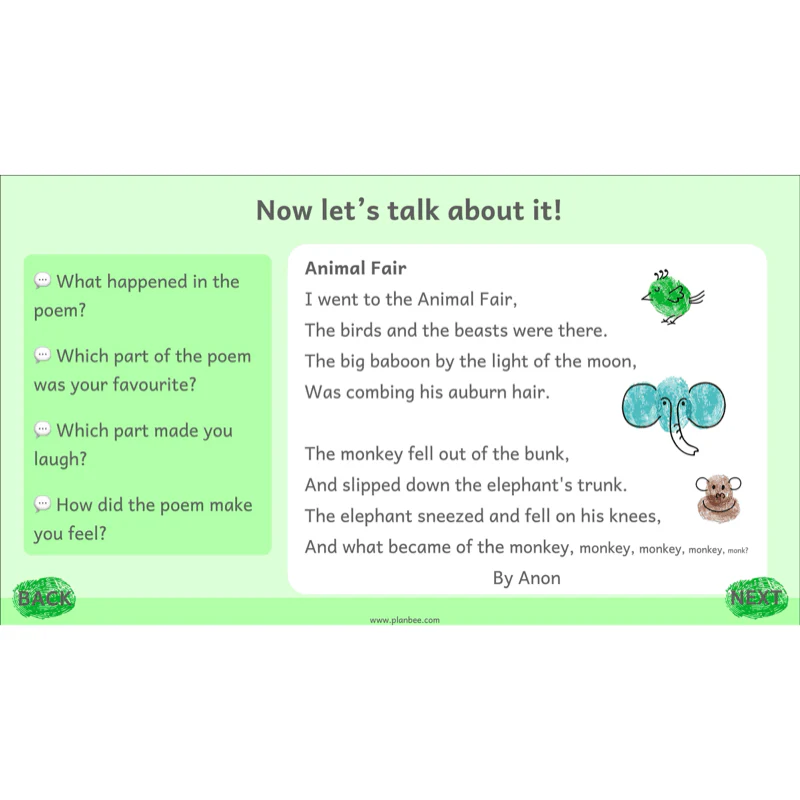
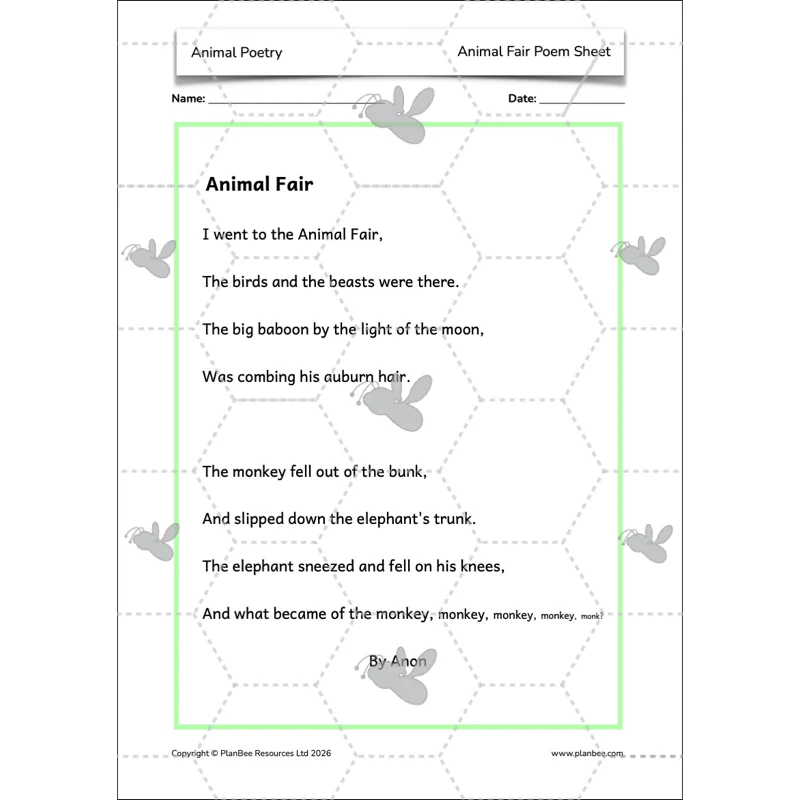
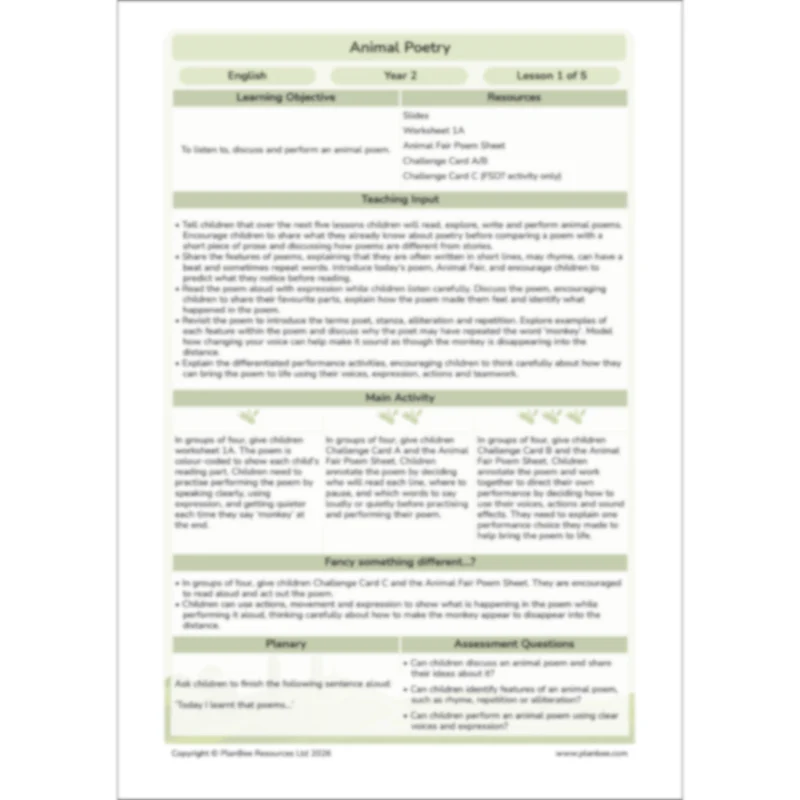
In this first lesson, children are introduced to poetry by exploring how poems differ from stories. They listen to and discuss the humorous poem Animal Fair, identifying key features such as rhyme, repetition and alliteration, and considering how these features make poems enjoyable to read aloud and perform.
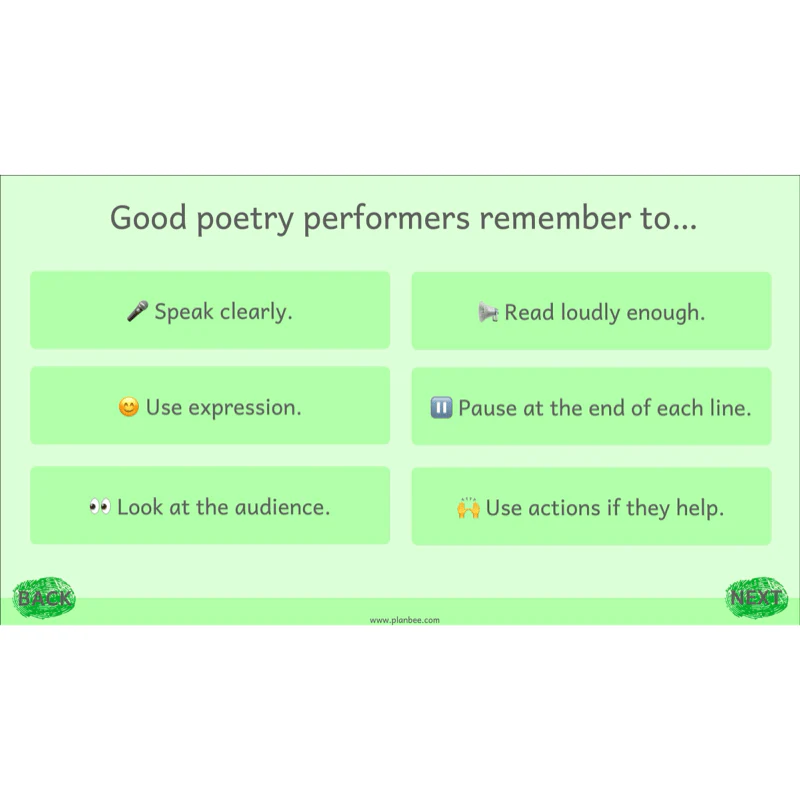
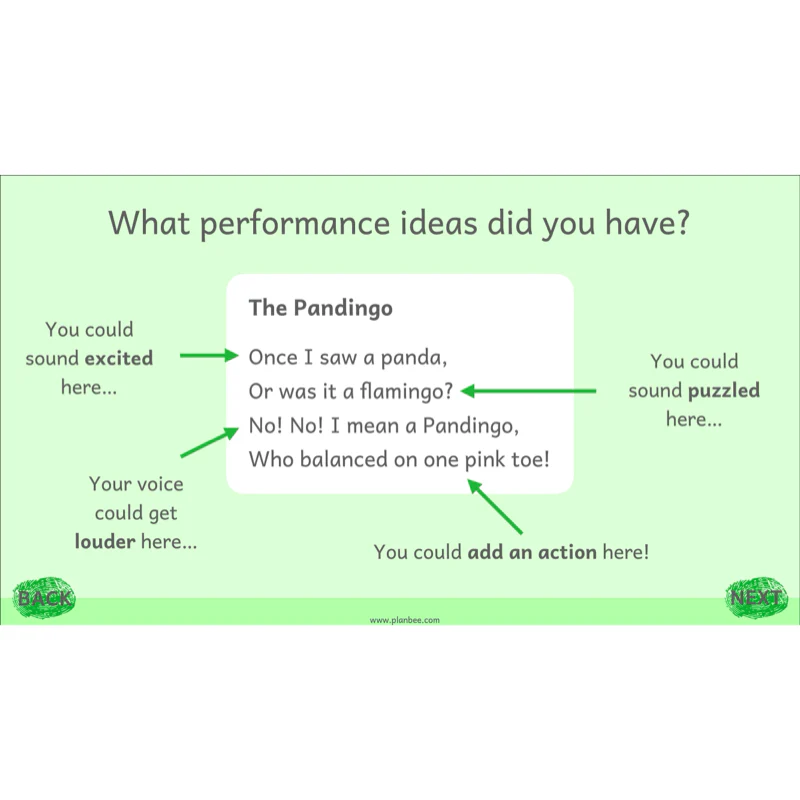
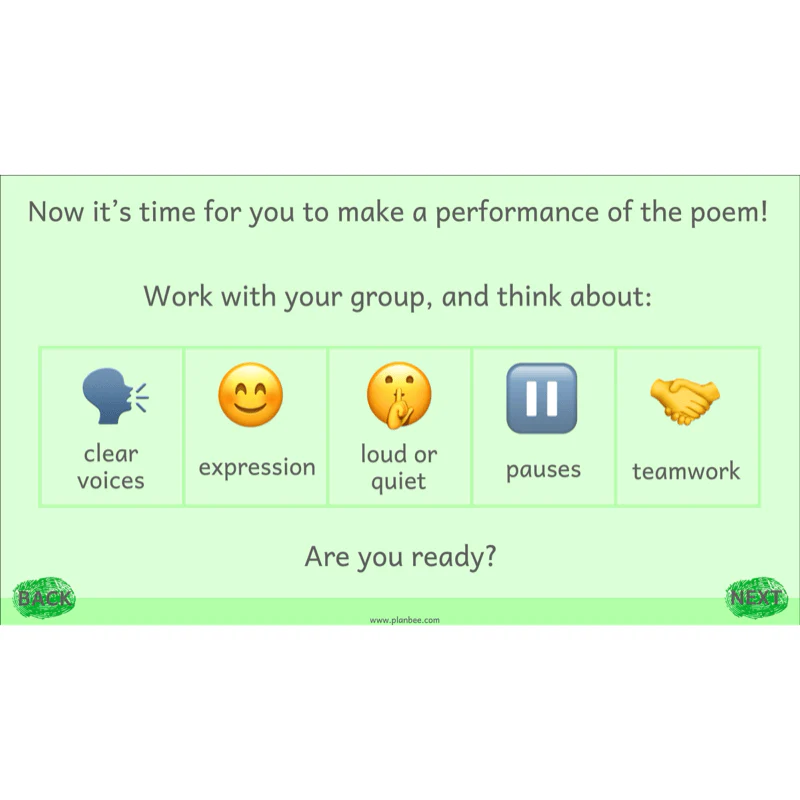
Children then work collaboratively to rehearse and perform the poem, using clear voices, expression and performance techniques to bring it to life.
Everything you need for a successful lesson is included in this downloadable Performance Poetry KS1 pack - an easy-to-follow plan, a set of PDF slides for the teaching input, differentiated activity ideas and printable resources.
What's included:
- Lesson plan
- Slides
- Activity ideas
- Animal Fair Poem Sheet
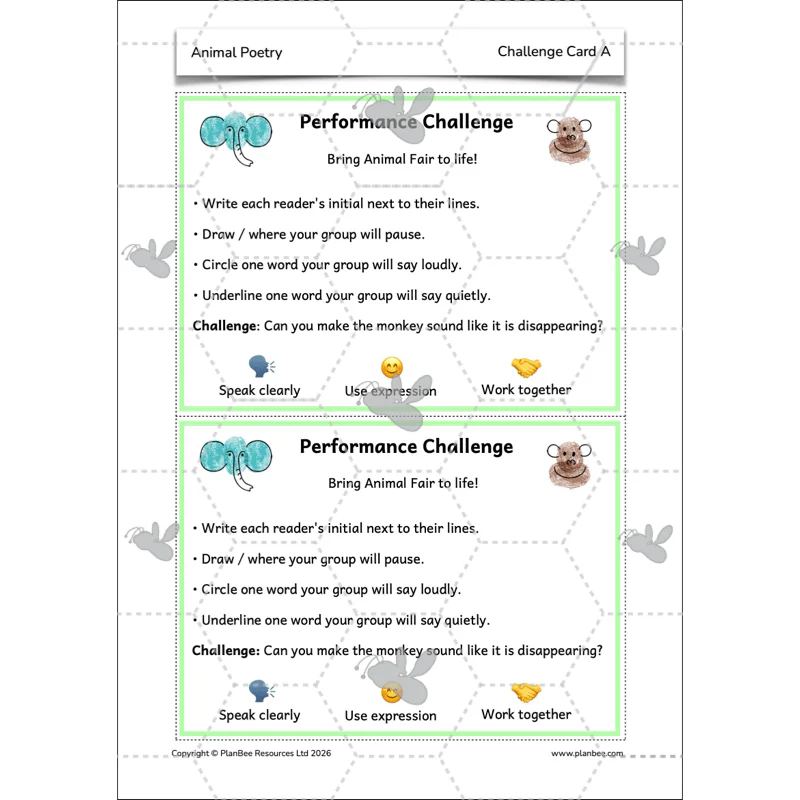
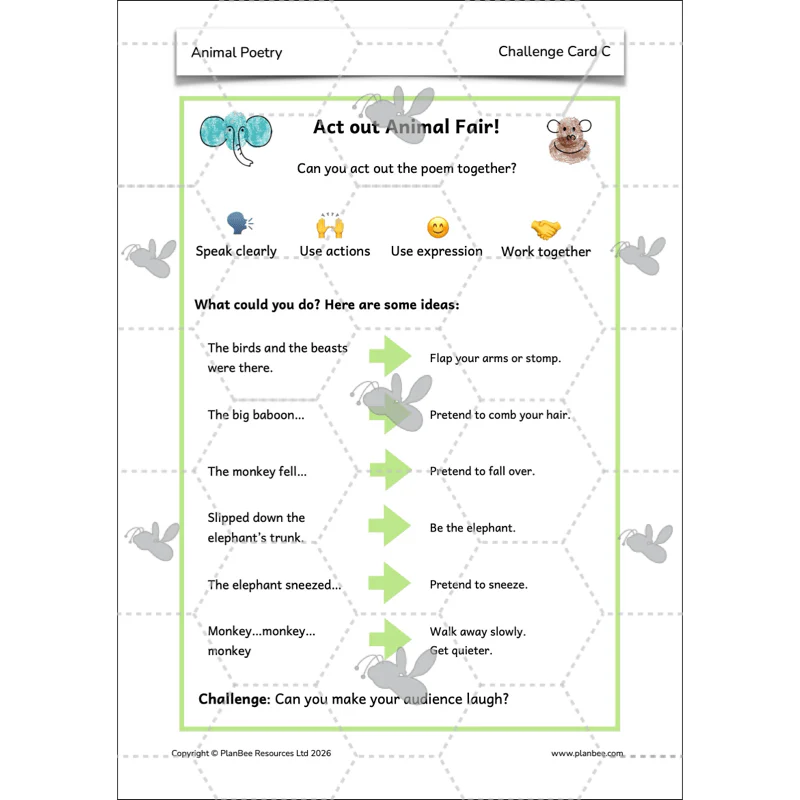
- Challenge Cards
Lesson 2: Identifying Features
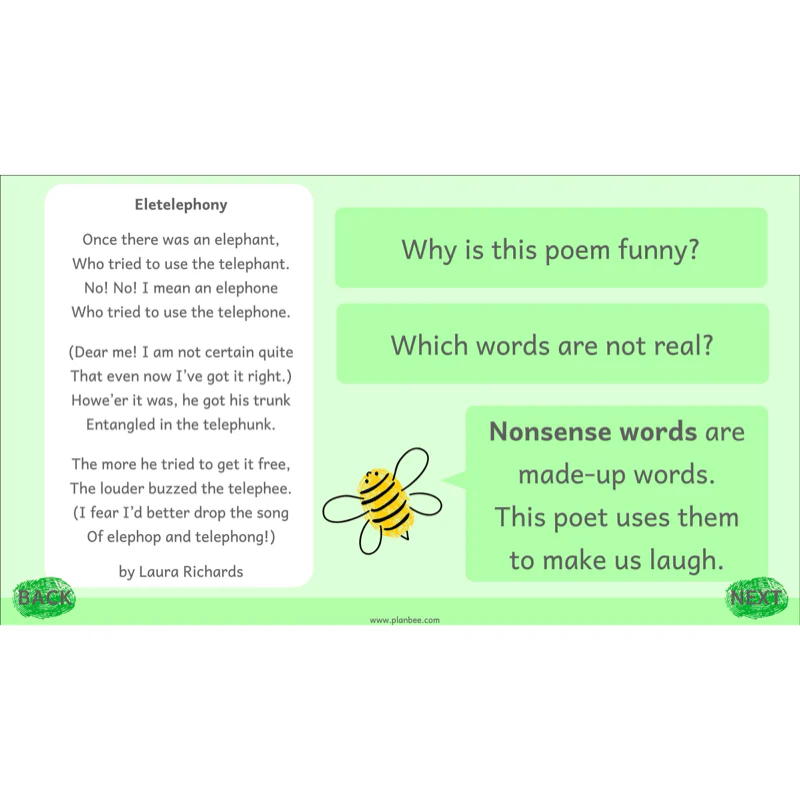
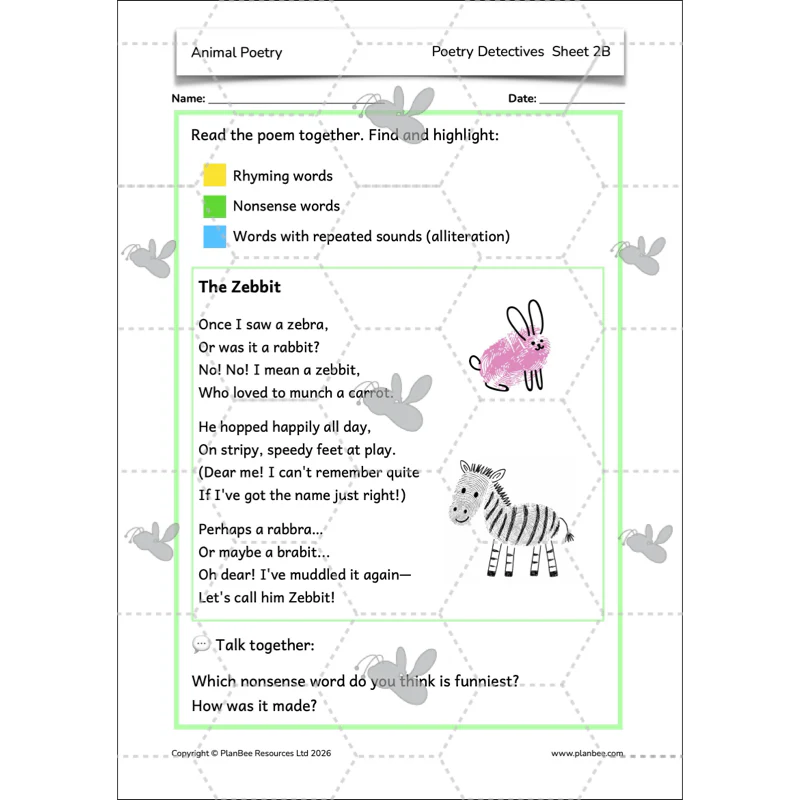
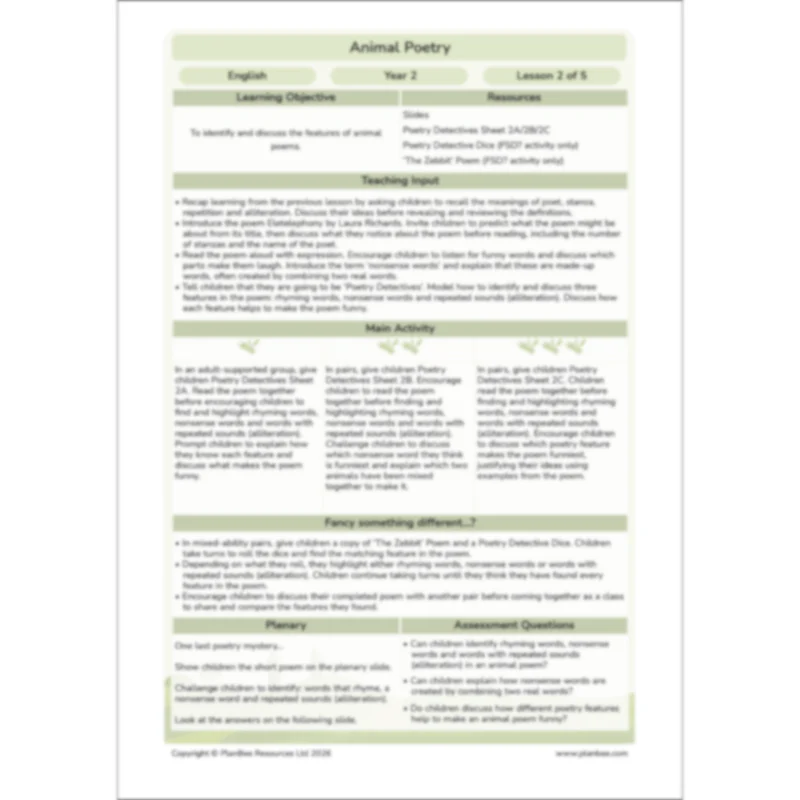
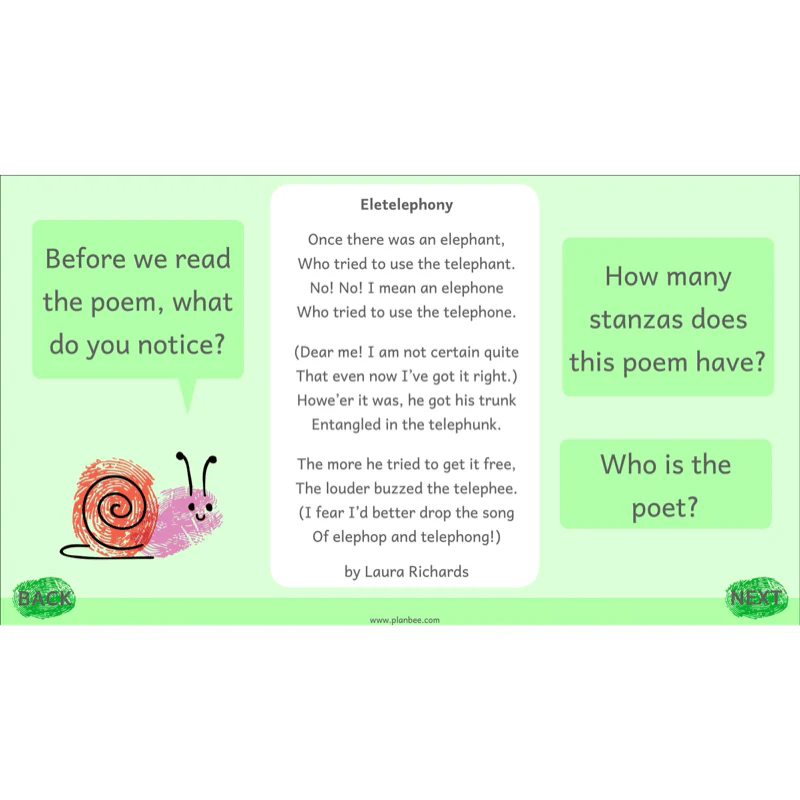
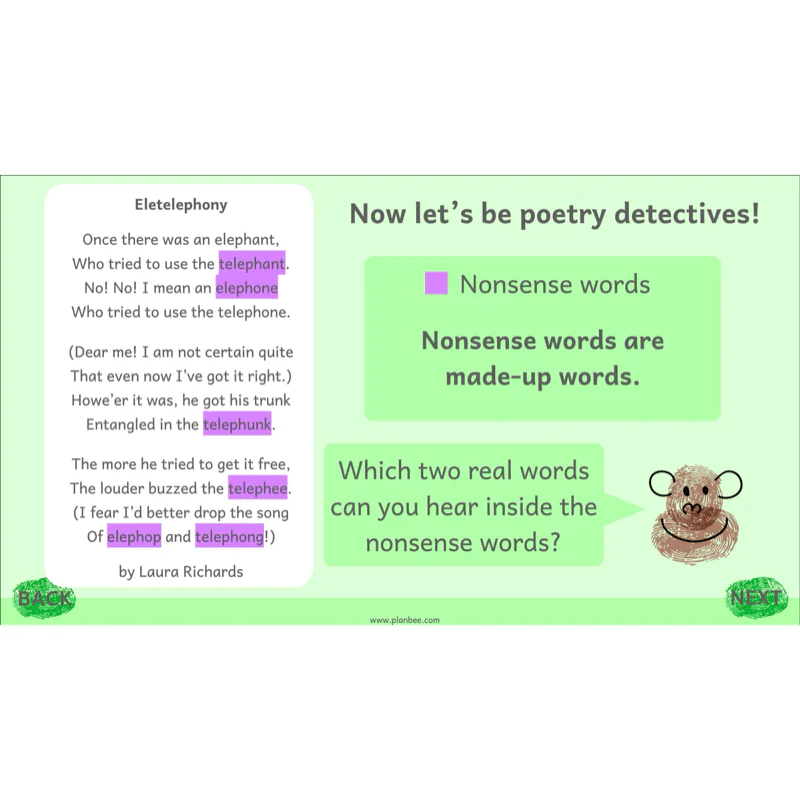
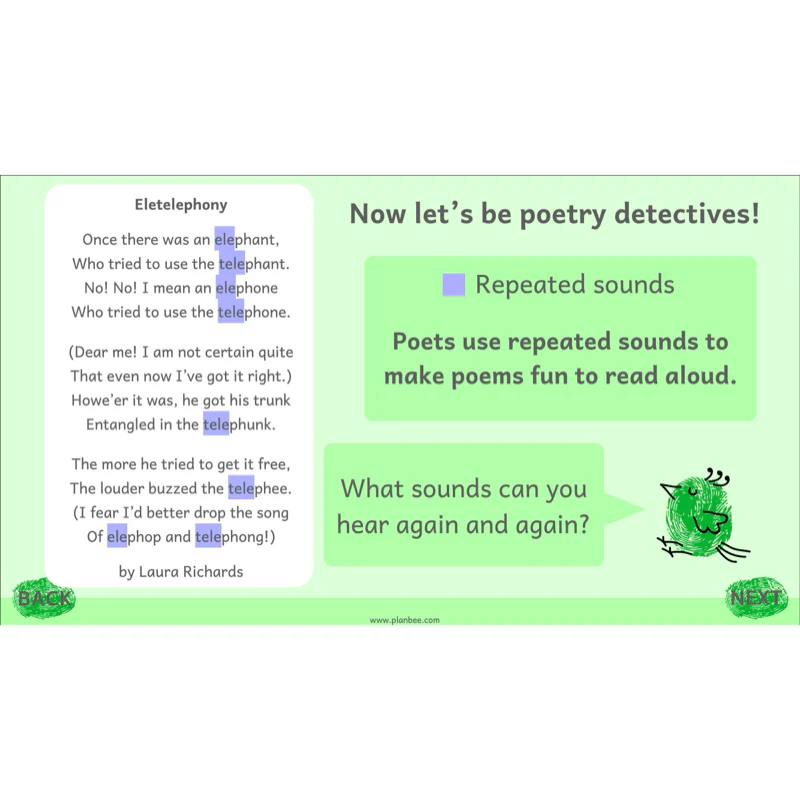
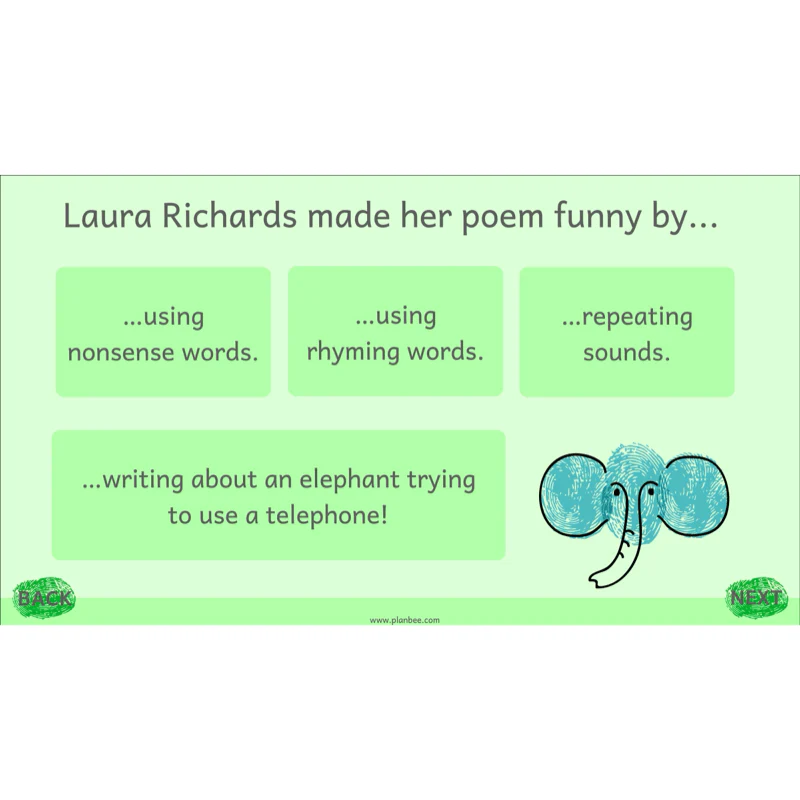
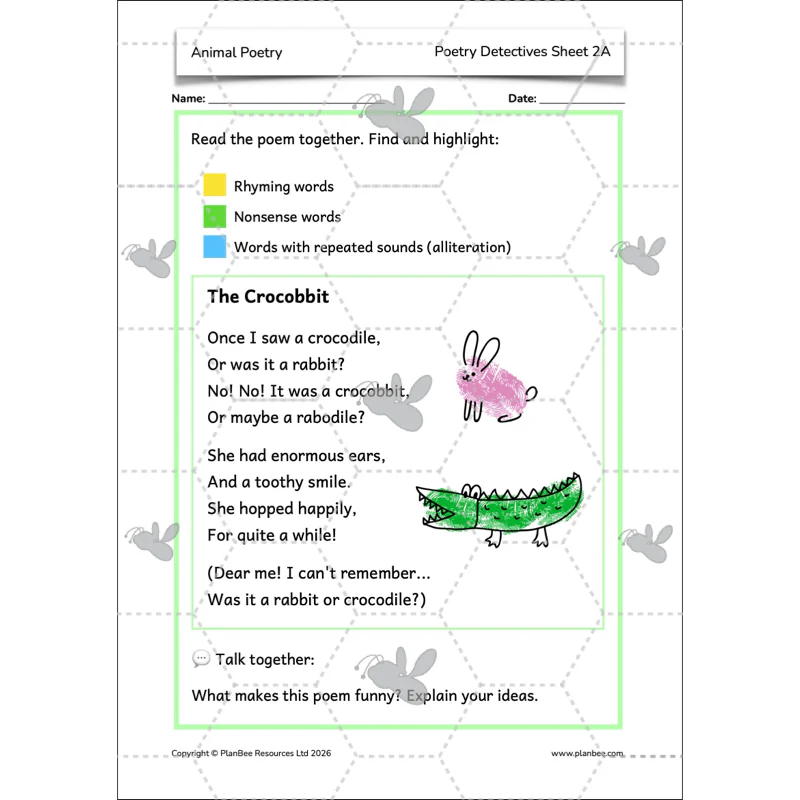
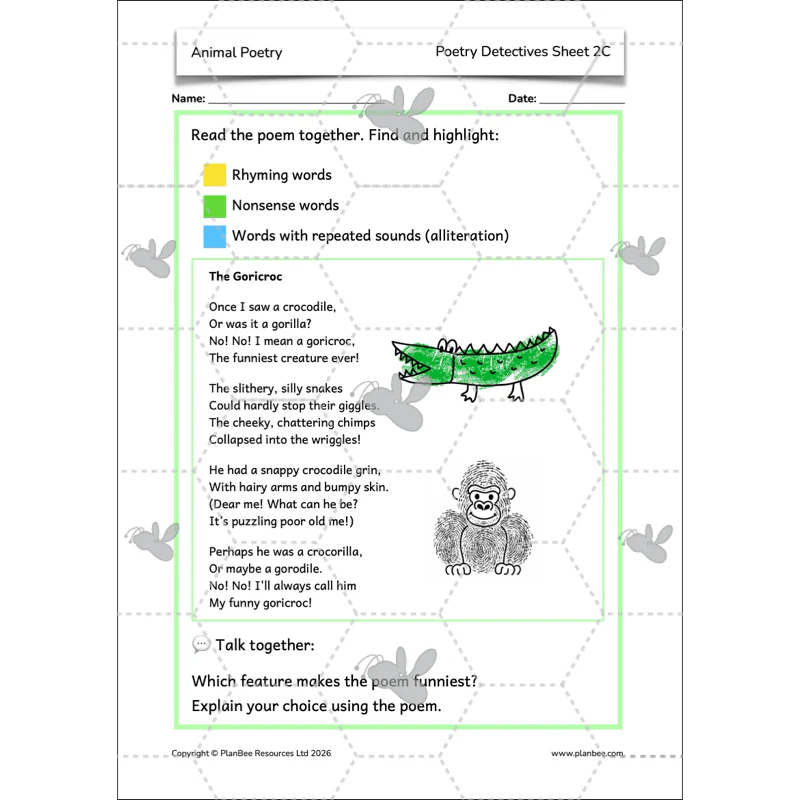
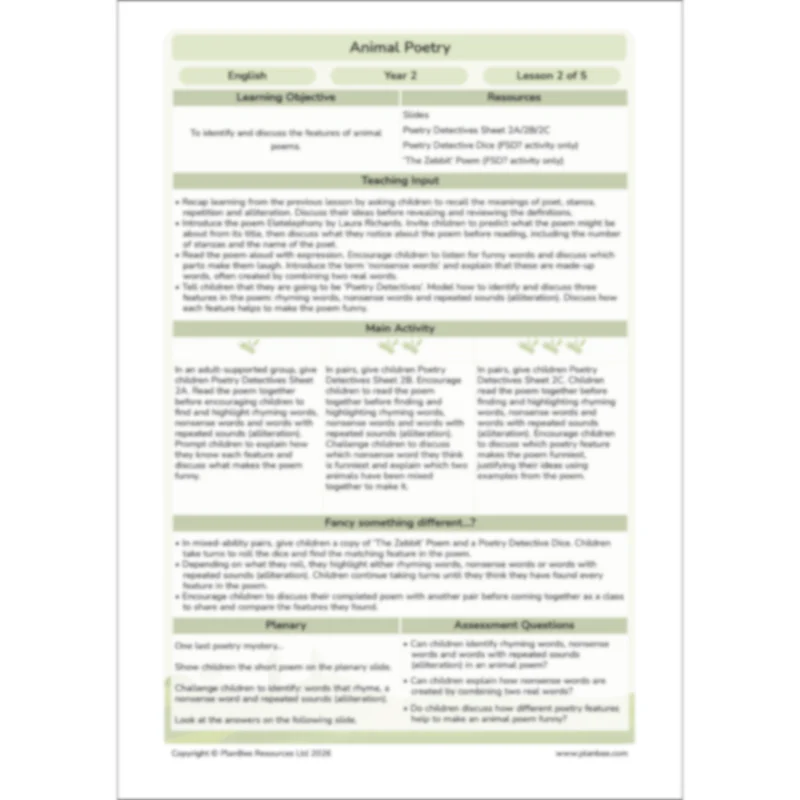
In this lesson, children become Poetry Detectives as they identify and discuss the features of funny animal poems. They listen to and explore Eletelephony by Laura Richards, identifying rhyming words, nonsense words and repeated sounds (alliteration), and discussing how these features make the poem humorous.
Children then apply their learning by investigating different animal poems and explaining how the poet has used these features to create a funny effect.
This Features of a Poem KS1 lesson pack includes a detailed plan, a set of engaging PDF slides for the teaching input, differentiated activity ideas and a range of printable resources.
What's included:
- Lesson plan
- Slides
- Activity ideas
- Poetry Detectives Sheets
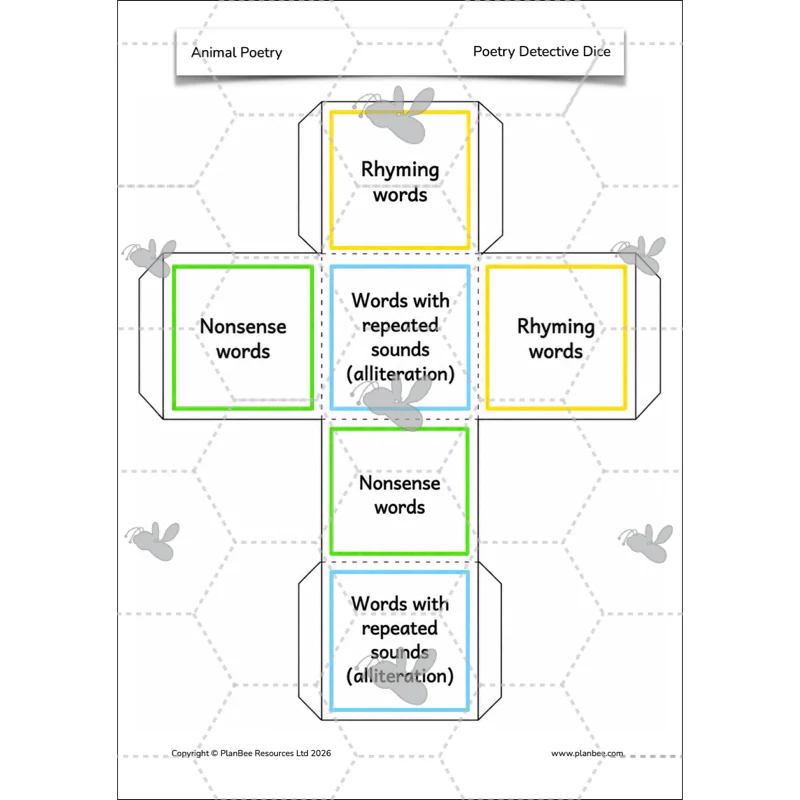
- Poetry Detectives Dice
- 'The Zebbit' Poem
Lesson 3: Collecting Words and Ideas
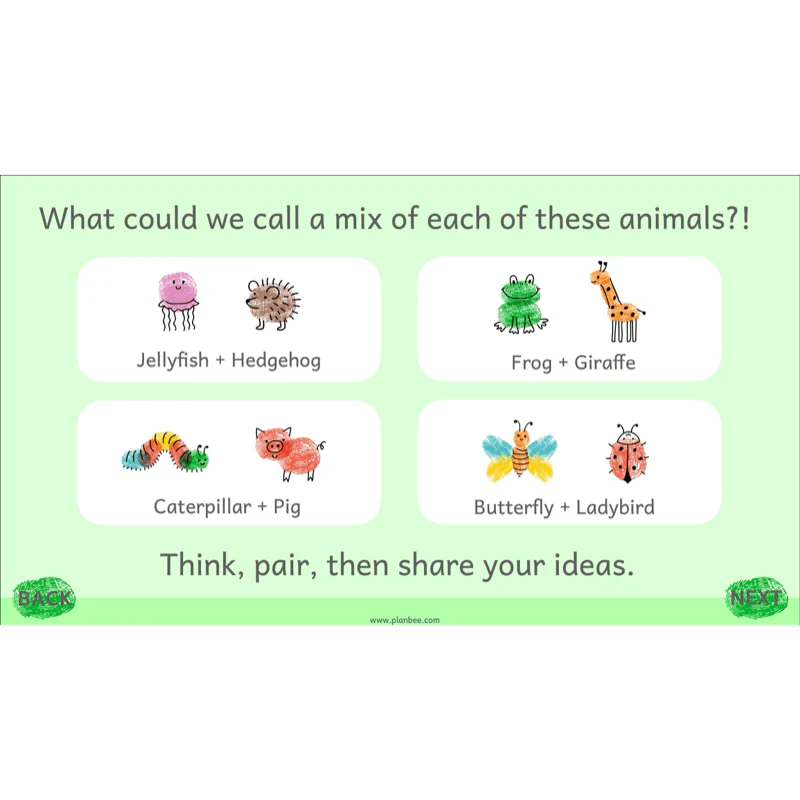
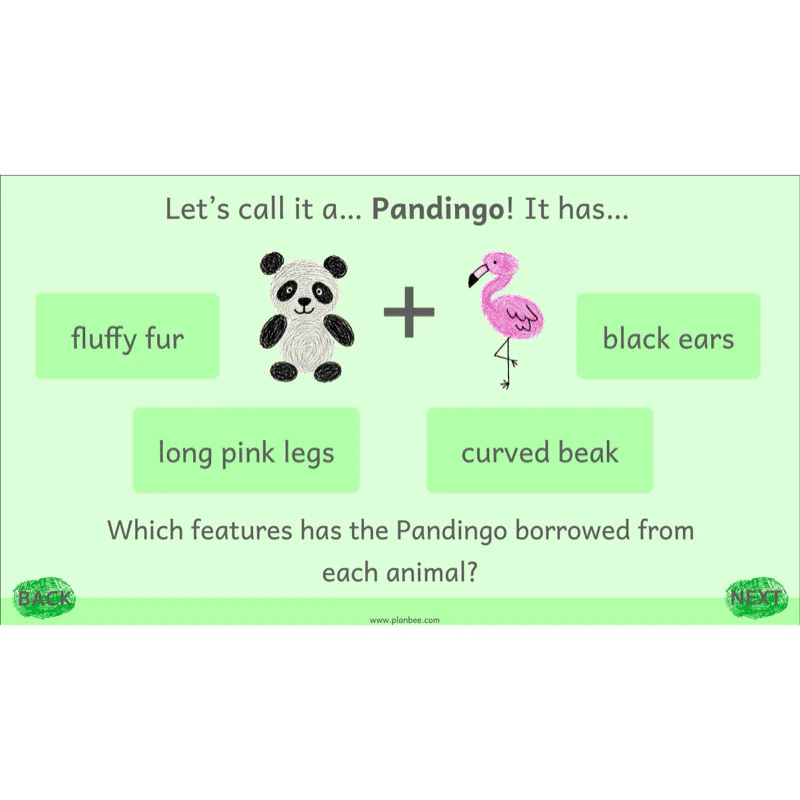
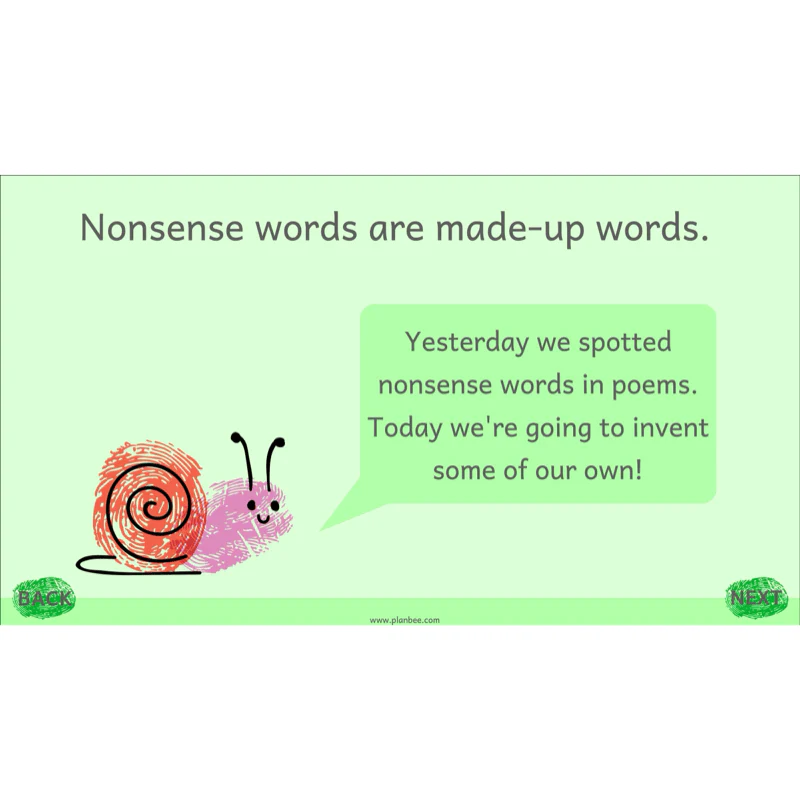
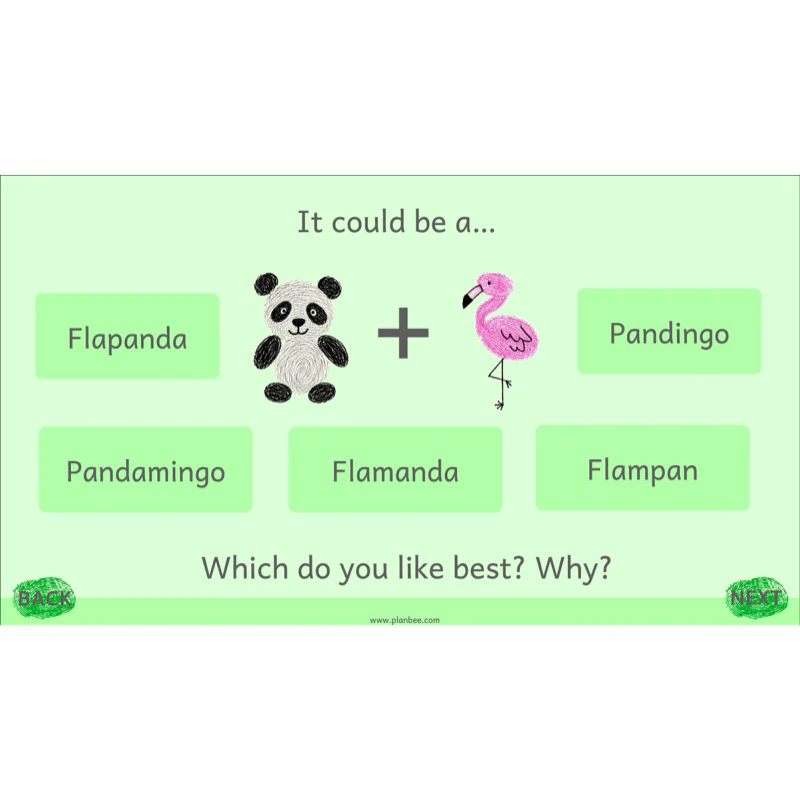
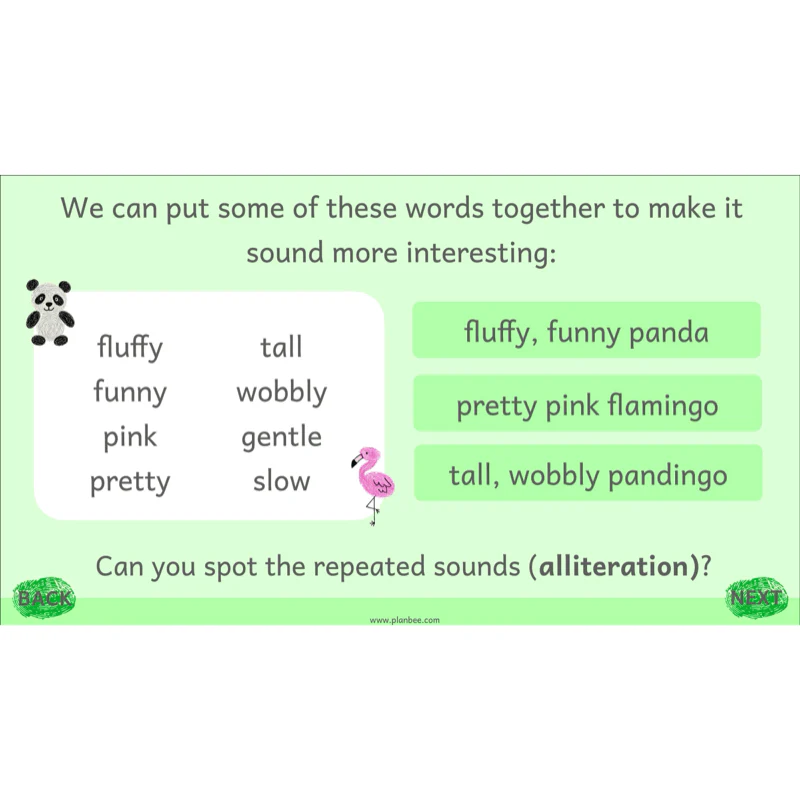
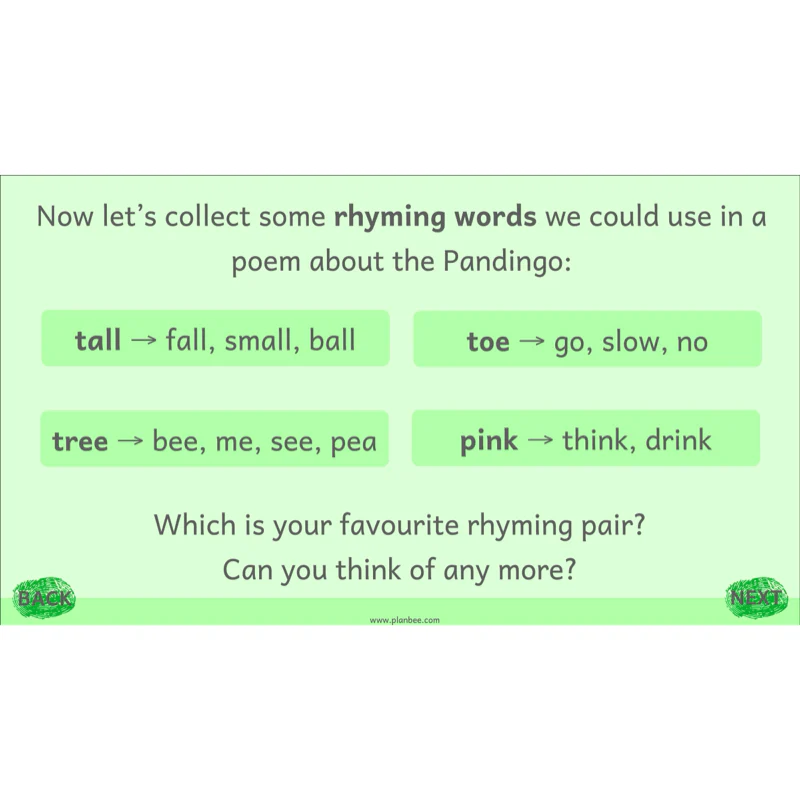
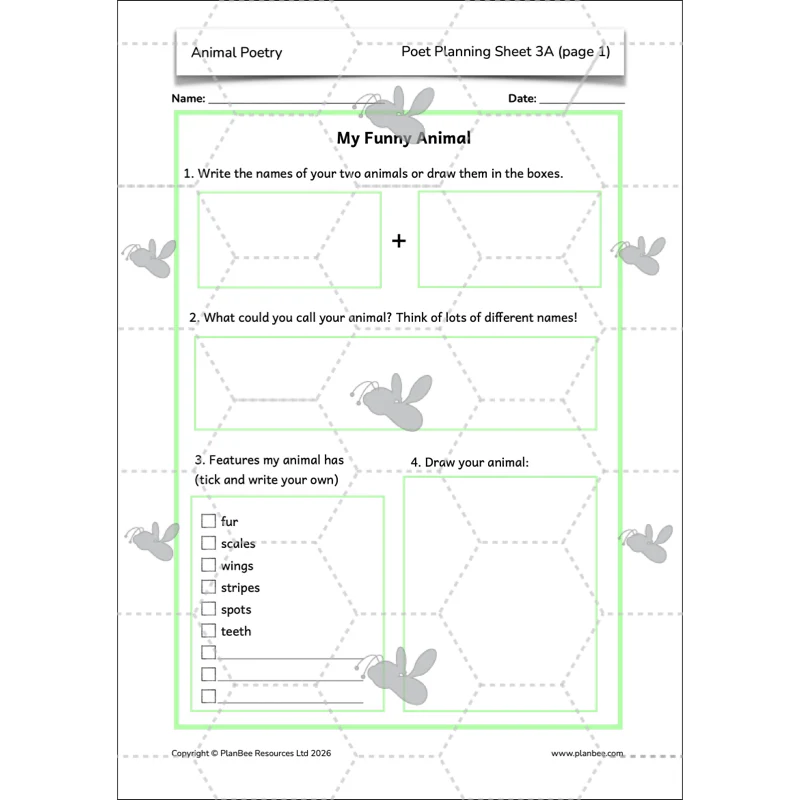
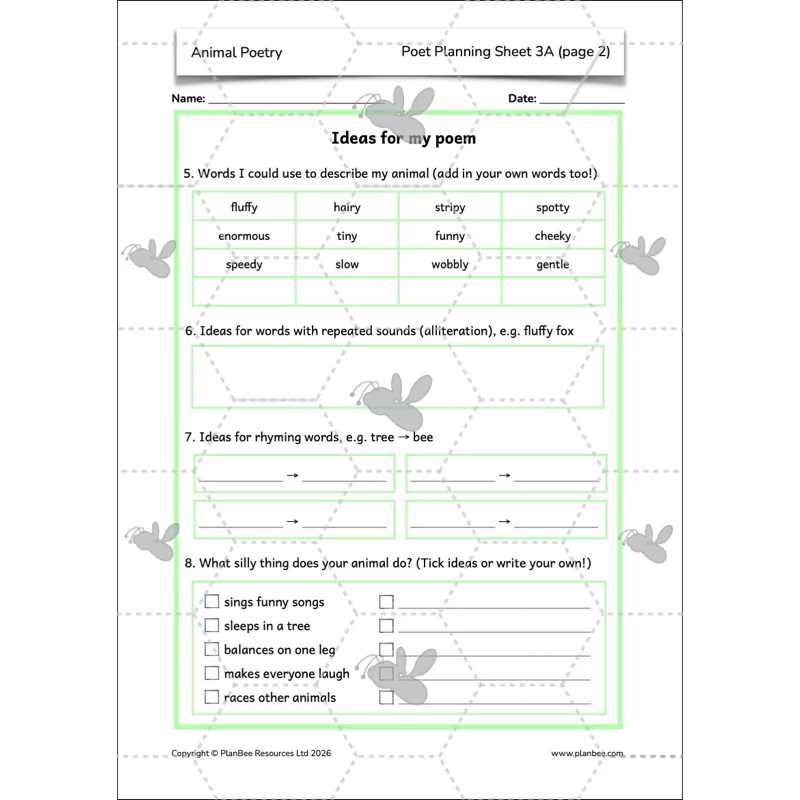
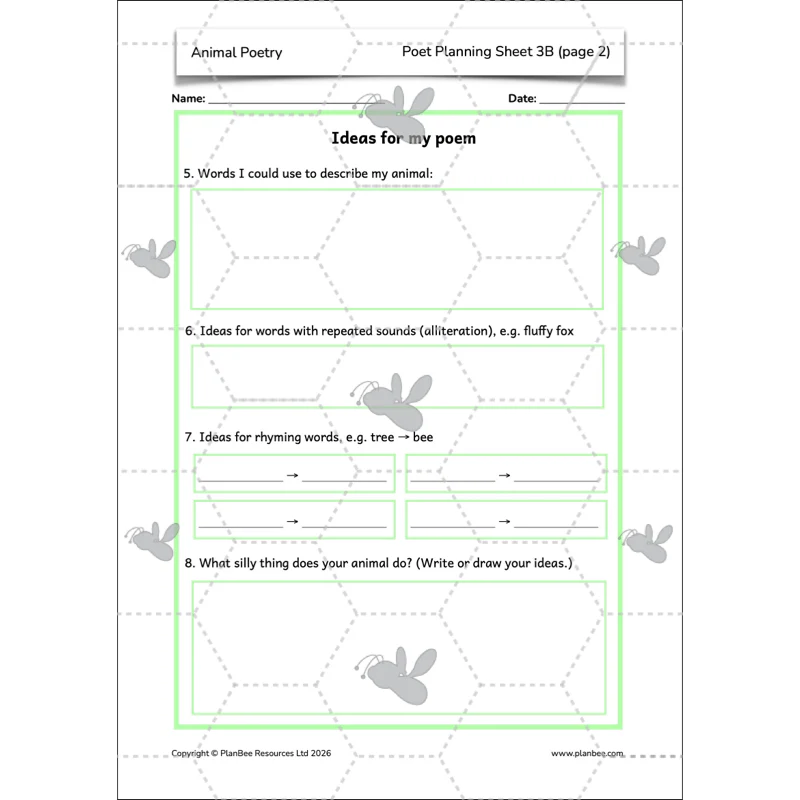
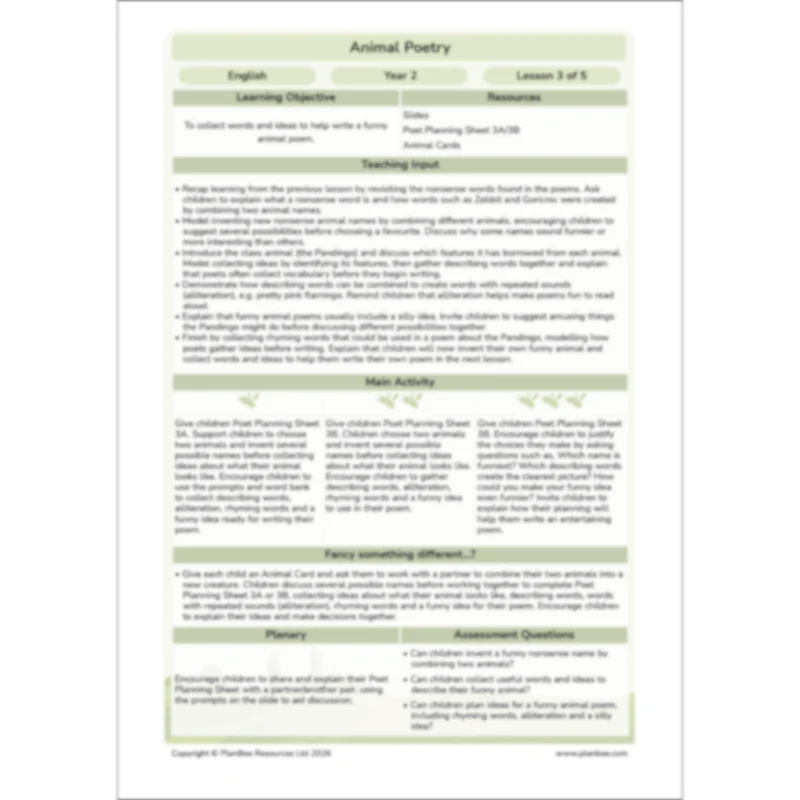
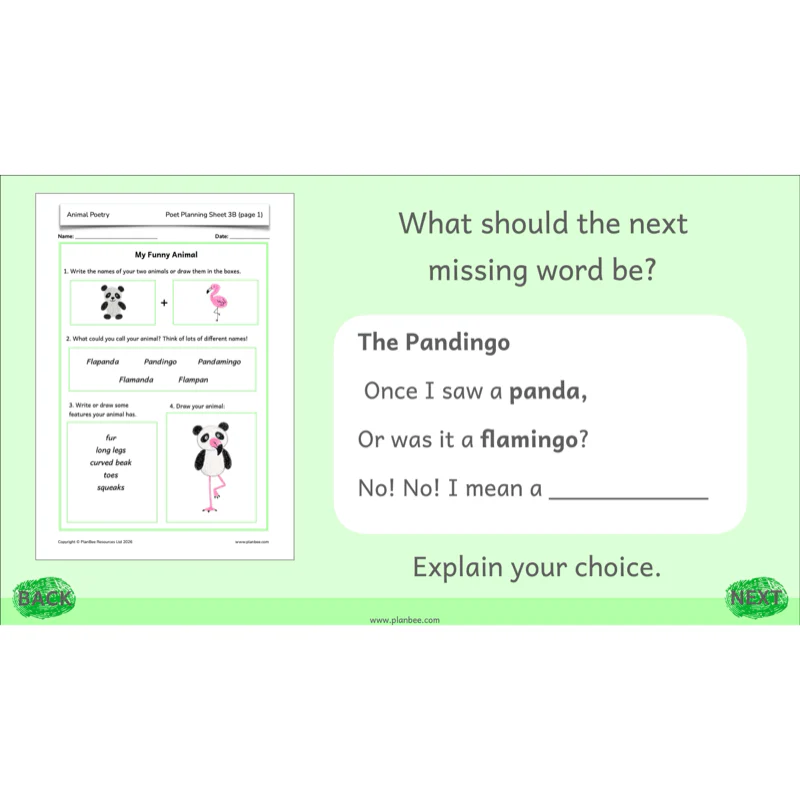
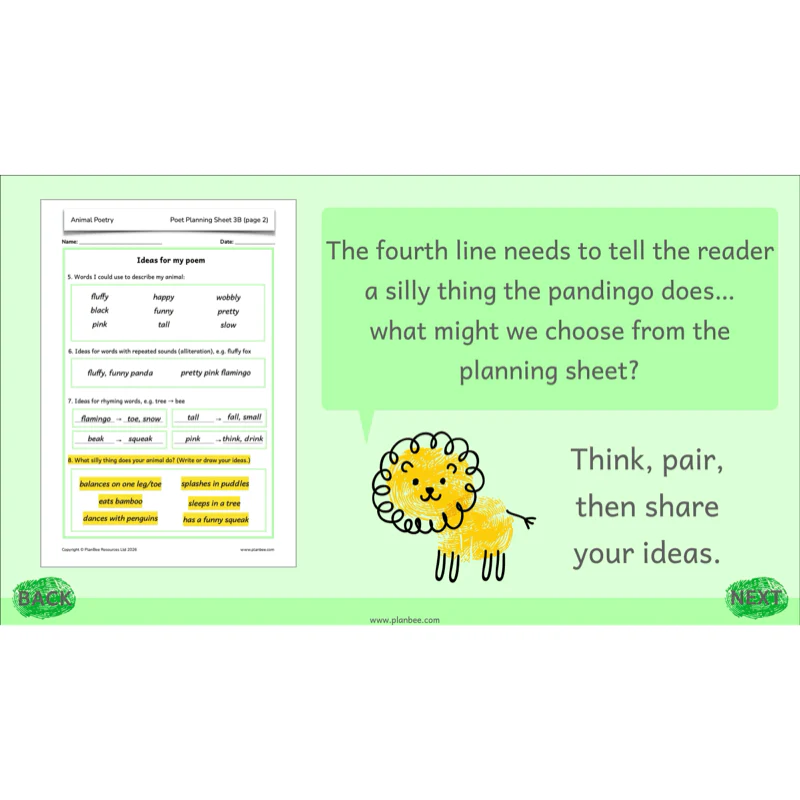
In this lesson, children collect words and ideas to help them write their own funny animal poems. They invent nonsense animal names by combining two animals, before developing their ideas by collecting describing words, words with repeated sounds (alliteration), rhyming words and a funny idea for their creature.
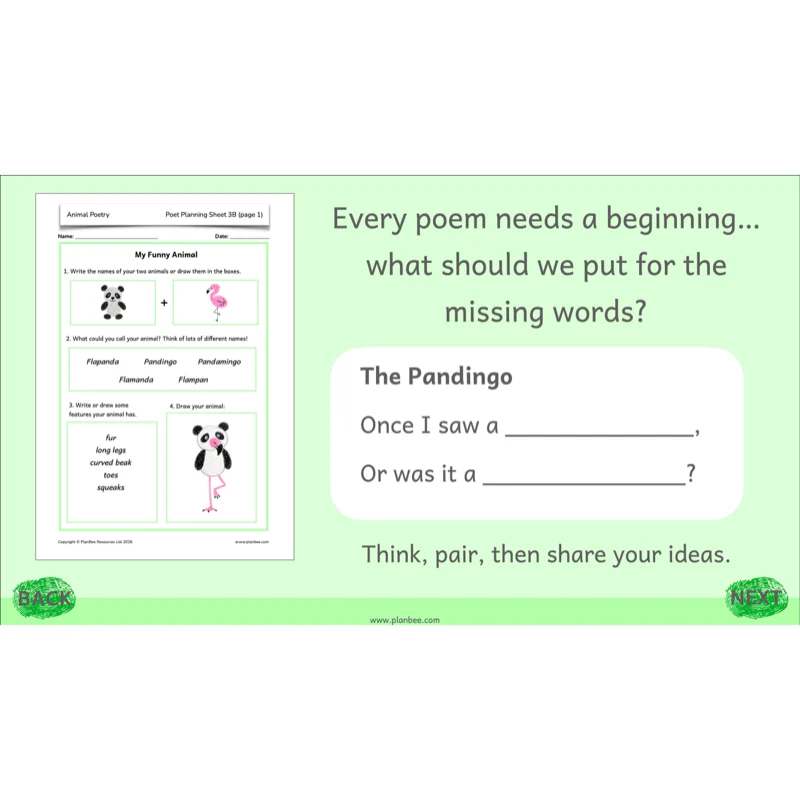
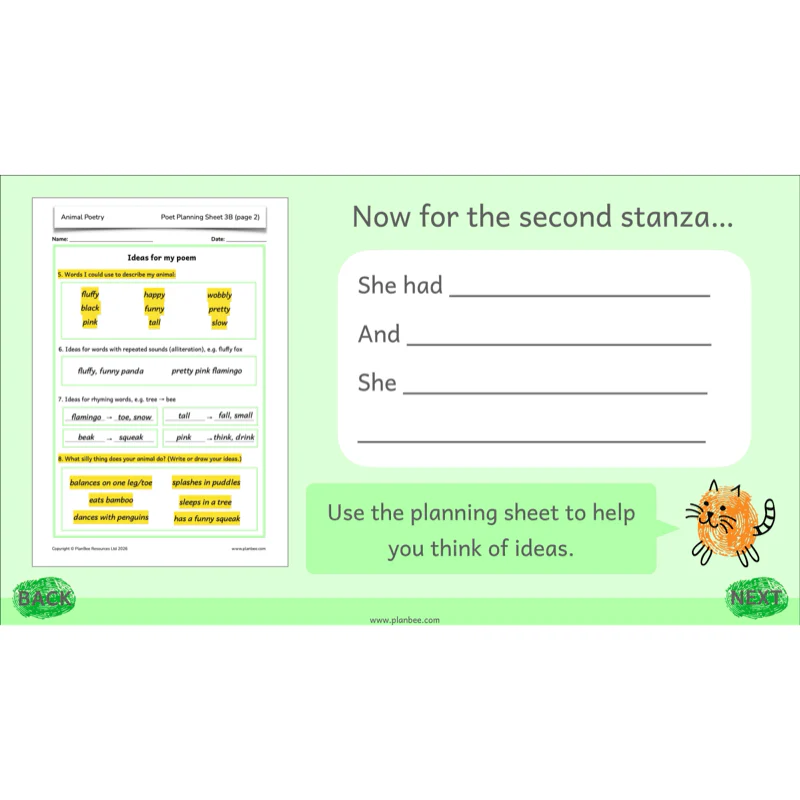
Children then apply their learning by planning their own funny animal, ready to write a humorous poem in the next lesson.
This Planning Poetry KS1 lesson pack comes with a set of engaging PDF slides, differentiated activity ideas and printable worksheets, as well as an easy-to-follow plan.
What's included:
- Lesson plan
- Slides
- Activity ideas
- Poet Planning Sheets
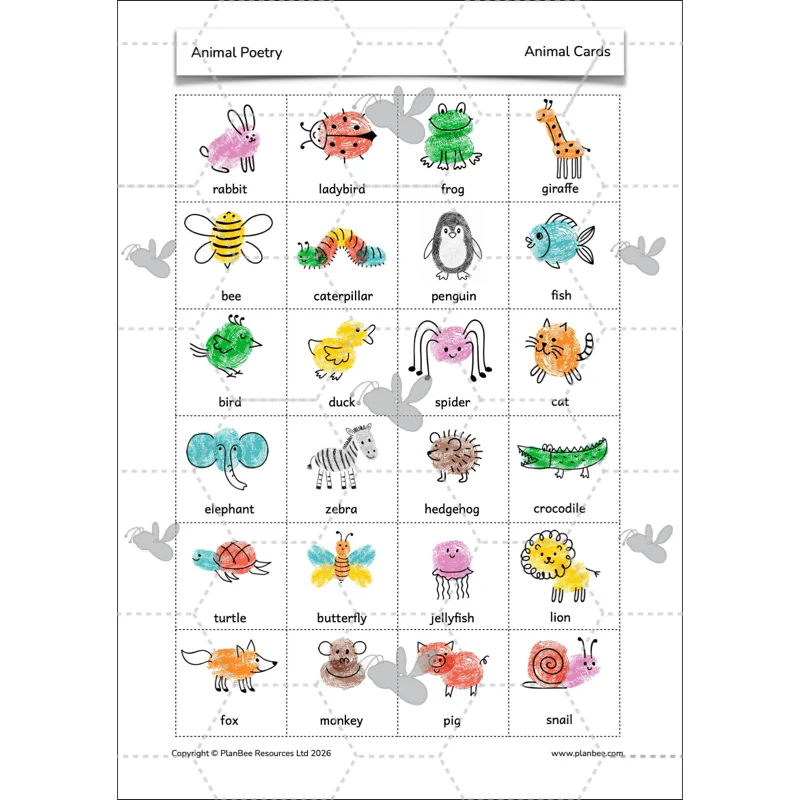
- Animal Cards
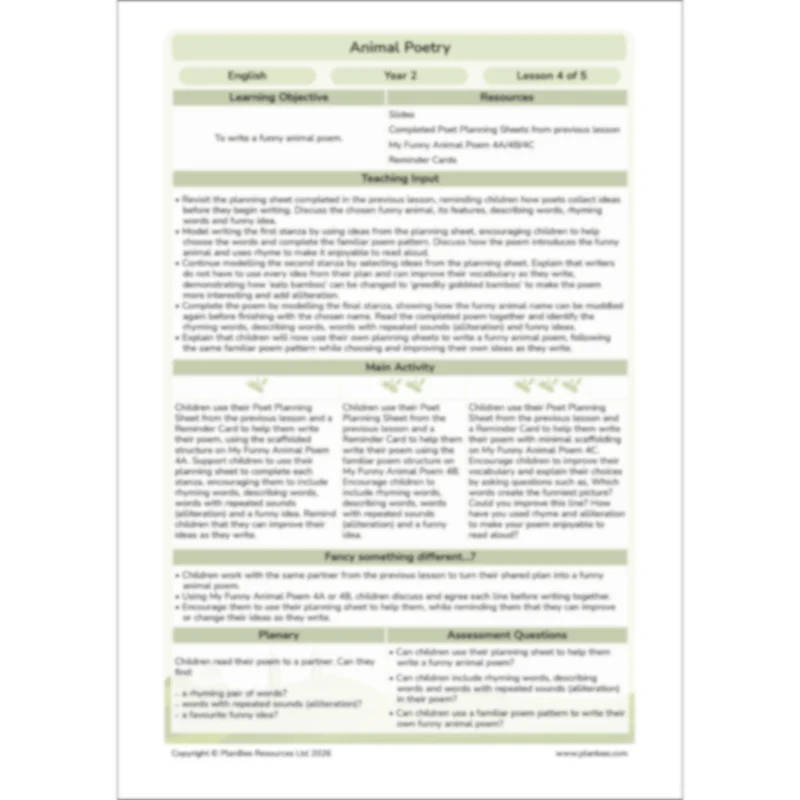
Lesson 4: Writing an Animal Poem
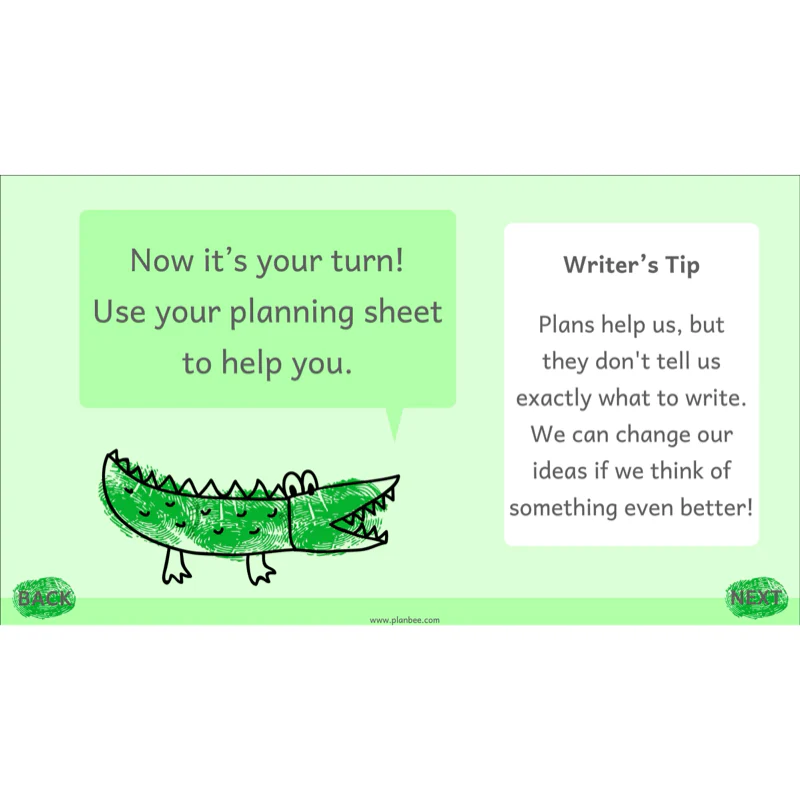
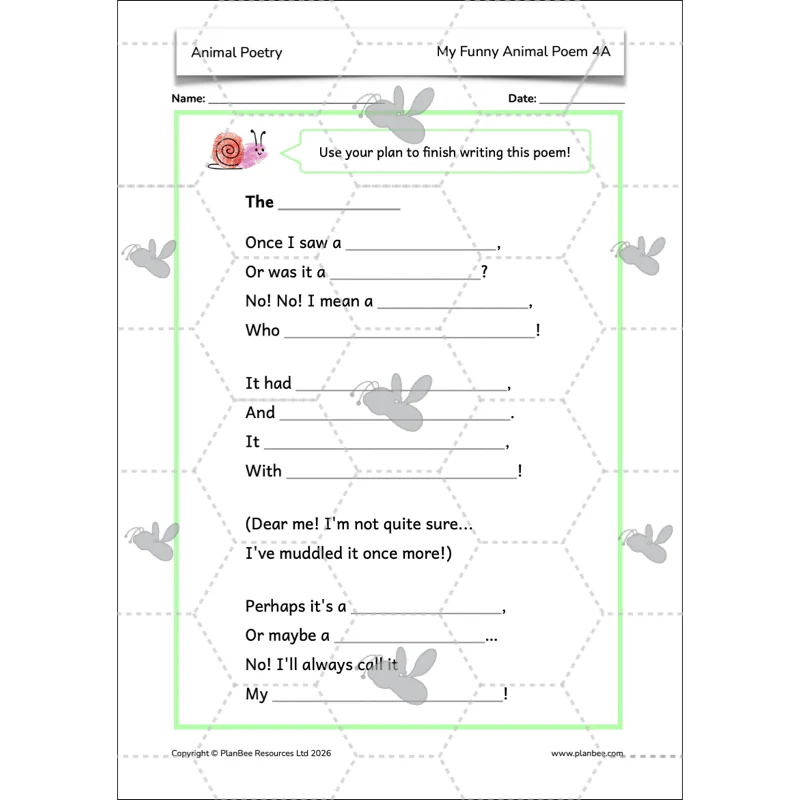
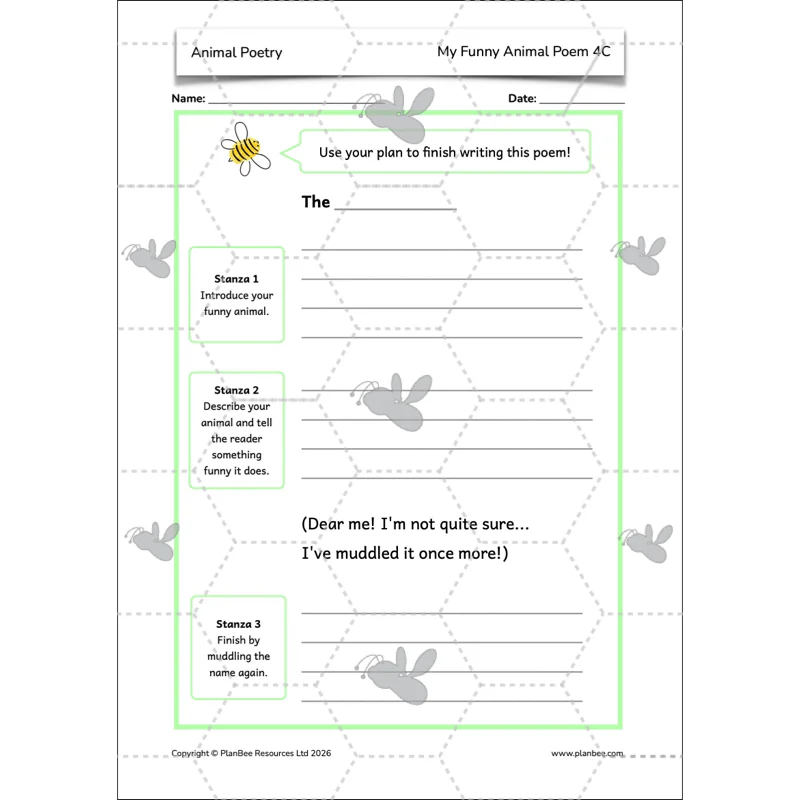
In this lesson, children write their own funny animal poems using the ideas they planned in the previous lesson. They explore how a planning sheet can be used to create a poem by following a familiar poem pattern, choosing and improving ideas as they write.
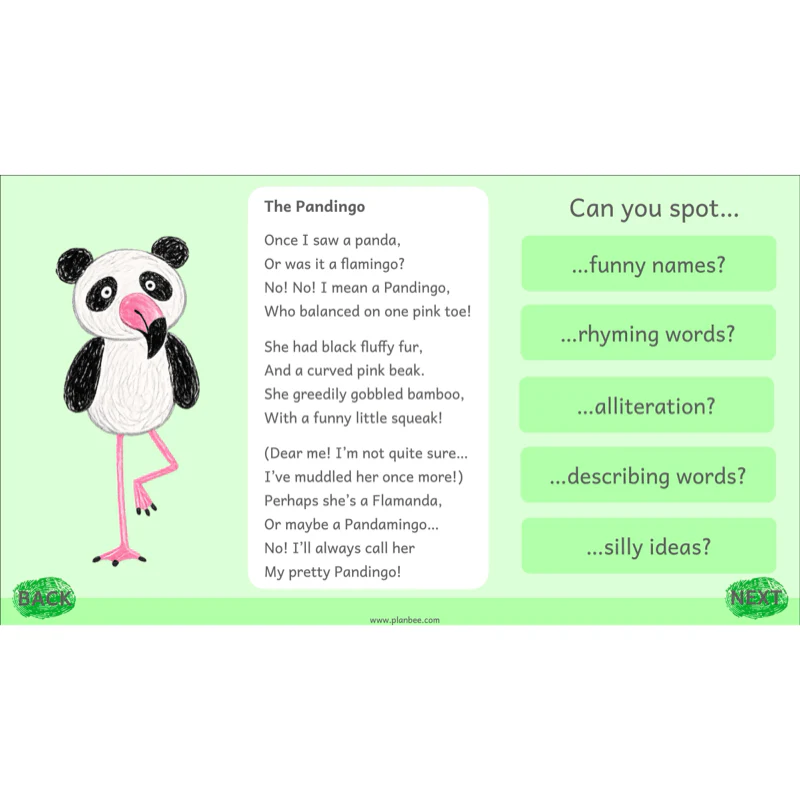
Children then apply their learning by writing their own humorous animal poem, including rhyming words, words with repeated sounds (alliteration), describing words and a funny idea.
This Writing a Poem KS1 lesson pack includes a detailed plan, a set of engaging PDF slides for the teaching input, differentiated activity ideas and printable resources to support your class in their independent tasks.
What's included:
- Lesson plan
- Slides
- Activity ideas
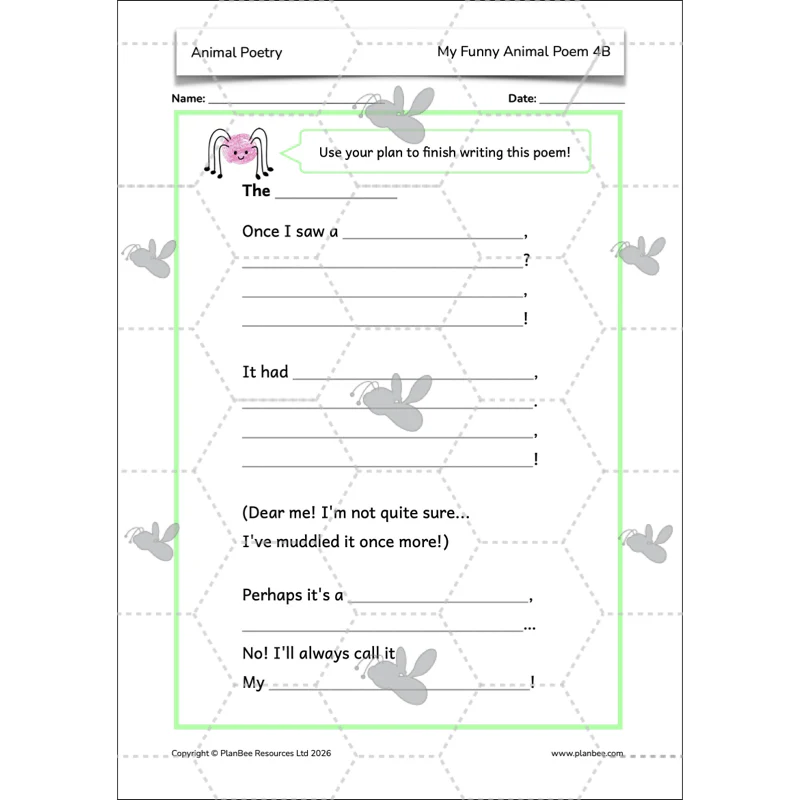
- My Funny Animal Poem Sheets
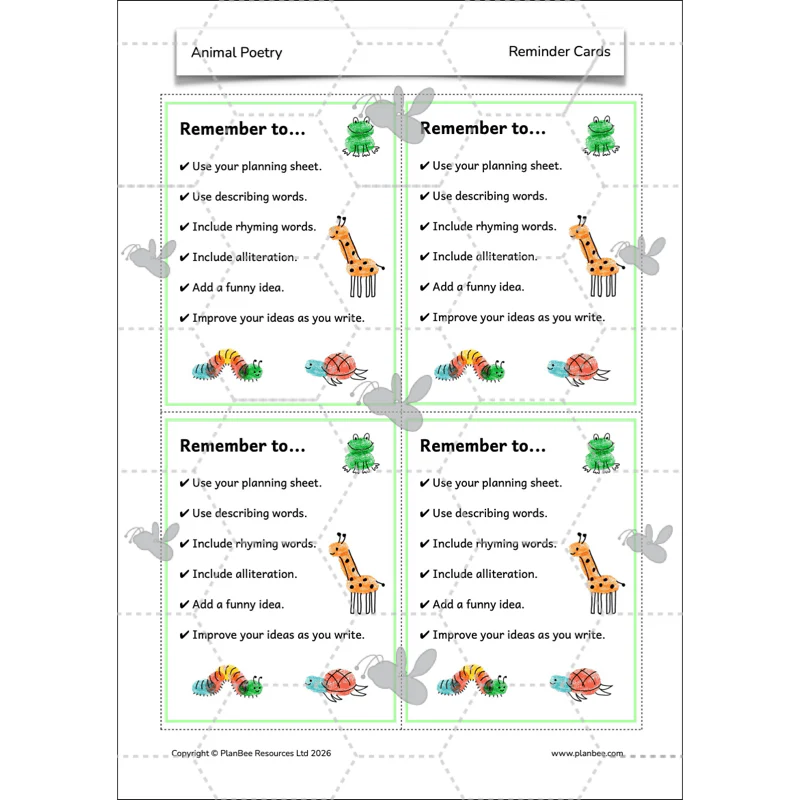
- Reminder Cards
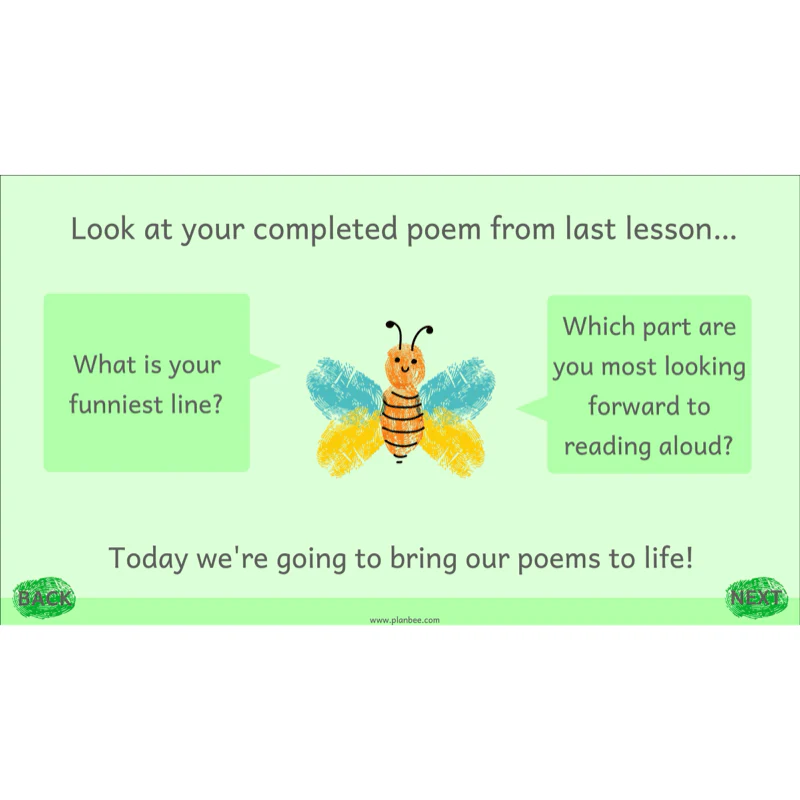
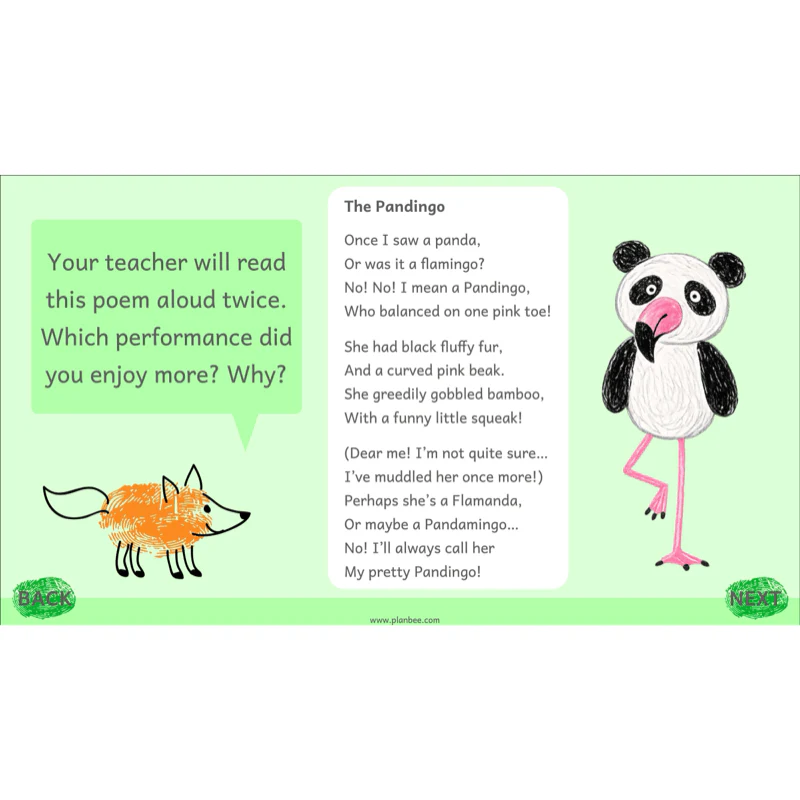
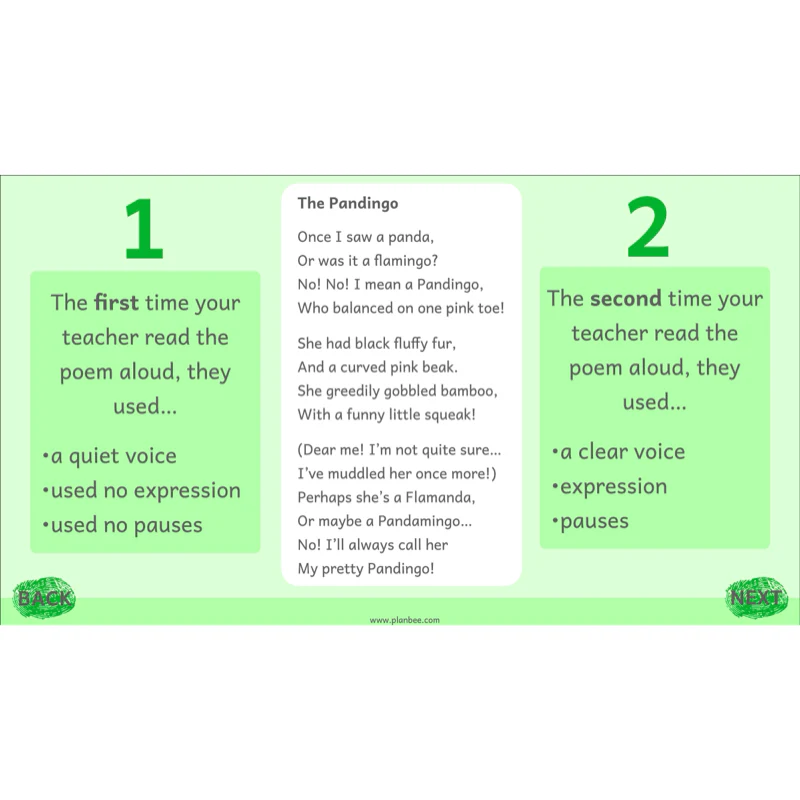
Lesson 5: Performing our Animal Poems
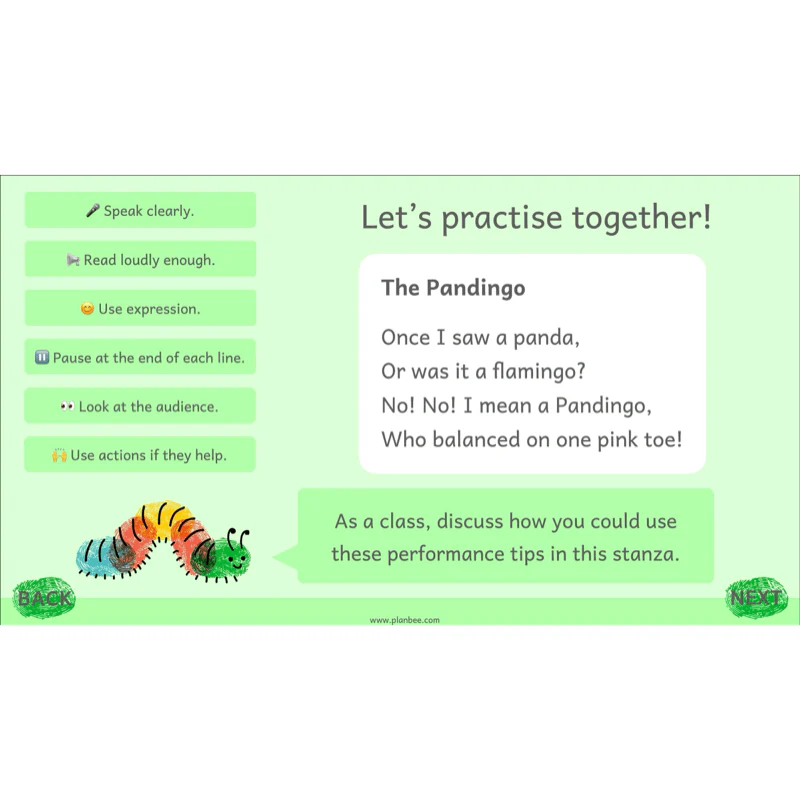
In this final lesson, children rehearse and perform the funny animal poems they wrote in the previous lesson. They explore how performance techniques, such as using a clear voice, expression, pauses and actions, can help bring a poem to life and make it enjoyable for an audience.
Children then apply their learning by rehearsing, improving and confidently performing their own funny animal poems.
This Performance Poetry KS1 lesson pack comes with a set of informative PDF slides, differentiated activity ideas and printable worksheets, as well as an easy-to-follow plan.
What's included:
- Lesson plan
- Slides
- Activity ideas
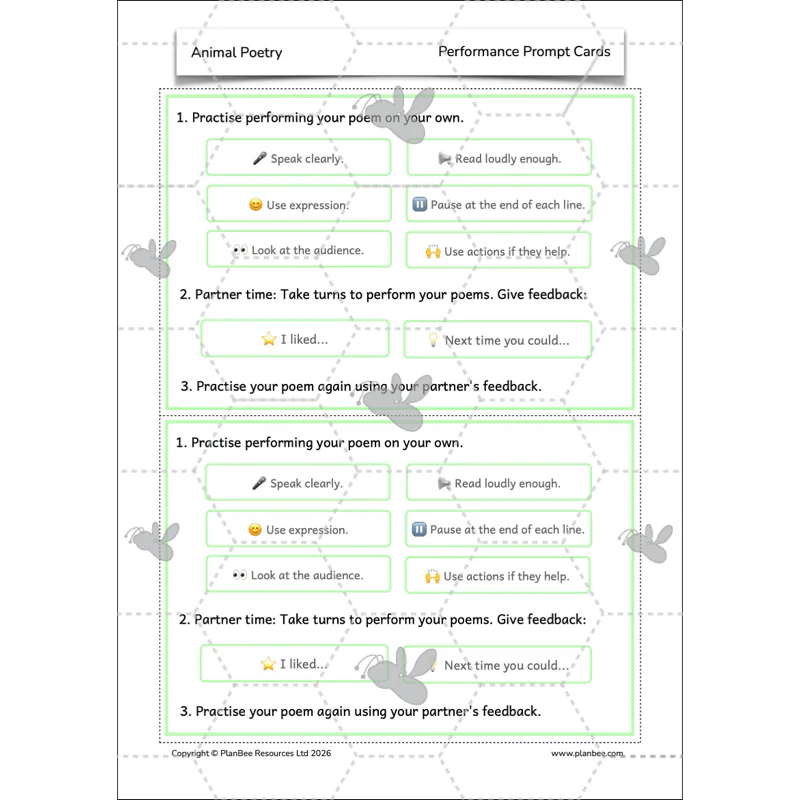
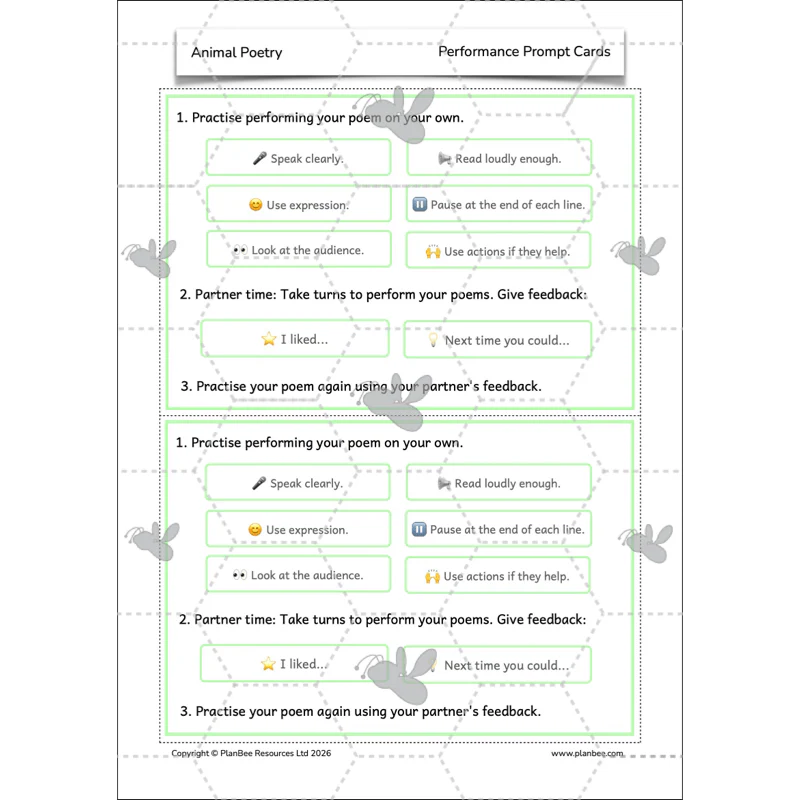
- Performance Prompt Cards
Original: $3.49
-65%$3.49
$1.22More Images
Animal Poetry
Over the course of five lessons, children begin by listening to, discussing and performing a humorous animal poem, before exploring the features that make funny poems enjoyable to read aloud and perform, including rhyme, alliteration and nonsense words. They then use these features to invent a funny animal, collecting vocabulary and ideas to plan their own poem. Using a familiar poem pattern, children write and improve their own humorous animal poem before rehearsing and confidently performing it to an audience, bringing together their reading, writing, speaking and listening skills.
Each of the lessons in this KS1 Poetry Pack come with a detailed plan, a set of engaging and informative PDF slides for the teaching input, differentiated activity ideas and a range of printable resources to support your children in their independent tasks.
Lesson 1: Performing a poem
In this first lesson, children are introduced to poetry by exploring how poems differ from stories. They listen to and discuss the humorous poem Animal Fair, identifying key features such as rhyme, repetition and alliteration, and considering how these features make poems enjoyable to read aloud and perform.
Children then work collaboratively to rehearse and perform the poem, using clear voices, expression and performance techniques to bring it to life.
Everything you need for a successful lesson is included in this downloadable Performance Poetry KS1 pack - an easy-to-follow plan, a set of PDF slides for the teaching input, differentiated activity ideas and printable resources.
What's included:
- Lesson plan
- Slides
- Activity ideas
- Animal Fair Poem Sheet
- Challenge Cards
Lesson 2: Identifying Features
In this lesson, children become Poetry Detectives as they identify and discuss the features of funny animal poems. They listen to and explore Eletelephony by Laura Richards, identifying rhyming words, nonsense words and repeated sounds (alliteration), and discussing how these features make the poem humorous.
Children then apply their learning by investigating different animal poems and explaining how the poet has used these features to create a funny effect.
This Features of a Poem KS1 lesson pack includes a detailed plan, a set of engaging PDF slides for the teaching input, differentiated activity ideas and a range of printable resources.
What's included:
- Lesson plan
- Slides
- Activity ideas
- Poetry Detectives Sheets
- Poetry Detectives Dice
- 'The Zebbit' Poem
Lesson 3: Collecting Words and Ideas
In this lesson, children collect words and ideas to help them write their own funny animal poems. They invent nonsense animal names by combining two animals, before developing their ideas by collecting describing words, words with repeated sounds (alliteration), rhyming words and a funny idea for their creature.
Children then apply their learning by planning their own funny animal, ready to write a humorous poem in the next lesson.
This Planning Poetry KS1 lesson pack comes with a set of engaging PDF slides, differentiated activity ideas and printable worksheets, as well as an easy-to-follow plan.
What's included:
- Lesson plan
- Slides
- Activity ideas
- Poet Planning Sheets
- Animal Cards
Lesson 4: Writing an Animal Poem
In this lesson, children write their own funny animal poems using the ideas they planned in the previous lesson. They explore how a planning sheet can be used to create a poem by following a familiar poem pattern, choosing and improving ideas as they write.
Children then apply their learning by writing their own humorous animal poem, including rhyming words, words with repeated sounds (alliteration), describing words and a funny idea.
This Writing a Poem KS1 lesson pack includes a detailed plan, a set of engaging PDF slides for the teaching input, differentiated activity ideas and printable resources to support your class in their independent tasks.
What's included:
- Lesson plan
- Slides
- Activity ideas
- My Funny Animal Poem Sheets
- Reminder Cards
Lesson 5: Performing our Animal Poems
In this final lesson, children rehearse and perform the funny animal poems they wrote in the previous lesson. They explore how performance techniques, such as using a clear voice, expression, pauses and actions, can help bring a poem to life and make it enjoyable for an audience.
Children then apply their learning by rehearsing, improving and confidently performing their own funny animal poems.
This Performance Poetry KS1 lesson pack comes with a set of informative PDF slides, differentiated activity ideas and printable worksheets, as well as an easy-to-follow plan.
What's included:
- Lesson plan
- Slides
- Activity ideas
- Performance Prompt Cards
Product Information
Product Information
Shipping & Returns
Shipping & Returns
Description
Over the course of five lessons, children begin by listening to, discussing and performing a humorous animal poem, before exploring the features that make funny poems enjoyable to read aloud and perform, including rhyme, alliteration and nonsense words. They then use these features to invent a funny animal, collecting vocabulary and ideas to plan their own poem. Using a familiar poem pattern, children write and improve their own humorous animal poem before rehearsing and confidently performing it to an audience, bringing together their reading, writing, speaking and listening skills.
Each of the lessons in this KS1 Poetry Pack come with a detailed plan, a set of engaging and informative PDF slides for the teaching input, differentiated activity ideas and a range of printable resources to support your children in their independent tasks.
Lesson 1: Performing a poem
In this first lesson, children are introduced to poetry by exploring how poems differ from stories. They listen to and discuss the humorous poem Animal Fair, identifying key features such as rhyme, repetition and alliteration, and considering how these features make poems enjoyable to read aloud and perform.
Children then work collaboratively to rehearse and perform the poem, using clear voices, expression and performance techniques to bring it to life.
Everything you need for a successful lesson is included in this downloadable Performance Poetry KS1 pack - an easy-to-follow plan, a set of PDF slides for the teaching input, differentiated activity ideas and printable resources.
What's included:
- Lesson plan
- Slides
- Activity ideas
- Animal Fair Poem Sheet
- Challenge Cards
Lesson 2: Identifying Features
In this lesson, children become Poetry Detectives as they identify and discuss the features of funny animal poems. They listen to and explore Eletelephony by Laura Richards, identifying rhyming words, nonsense words and repeated sounds (alliteration), and discussing how these features make the poem humorous.
Children then apply their learning by investigating different animal poems and explaining how the poet has used these features to create a funny effect.
This Features of a Poem KS1 lesson pack includes a detailed plan, a set of engaging PDF slides for the teaching input, differentiated activity ideas and a range of printable resources.
What's included:
- Lesson plan
- Slides
- Activity ideas
- Poetry Detectives Sheets
- Poetry Detectives Dice
- 'The Zebbit' Poem
Lesson 3: Collecting Words and Ideas
In this lesson, children collect words and ideas to help them write their own funny animal poems. They invent nonsense animal names by combining two animals, before developing their ideas by collecting describing words, words with repeated sounds (alliteration), rhyming words and a funny idea for their creature.
Children then apply their learning by planning their own funny animal, ready to write a humorous poem in the next lesson.
This Planning Poetry KS1 lesson pack comes with a set of engaging PDF slides, differentiated activity ideas and printable worksheets, as well as an easy-to-follow plan.
What's included:
- Lesson plan
- Slides
- Activity ideas
- Poet Planning Sheets
- Animal Cards
Lesson 4: Writing an Animal Poem
In this lesson, children write their own funny animal poems using the ideas they planned in the previous lesson. They explore how a planning sheet can be used to create a poem by following a familiar poem pattern, choosing and improving ideas as they write.
Children then apply their learning by writing their own humorous animal poem, including rhyming words, words with repeated sounds (alliteration), describing words and a funny idea.
This Writing a Poem KS1 lesson pack includes a detailed plan, a set of engaging PDF slides for the teaching input, differentiated activity ideas and printable resources to support your class in their independent tasks.
What's included:
- Lesson plan
- Slides
- Activity ideas
- My Funny Animal Poem Sheets
- Reminder Cards
Lesson 5: Performing our Animal Poems
In this final lesson, children rehearse and perform the funny animal poems they wrote in the previous lesson. They explore how performance techniques, such as using a clear voice, expression, pauses and actions, can help bring a poem to life and make it enjoyable for an audience.
Children then apply their learning by rehearsing, improving and confidently performing their own funny animal poems.
This Performance Poetry KS1 lesson pack comes with a set of informative PDF slides, differentiated activity ideas and printable worksheets, as well as an easy-to-follow plan.
What's included:
- Lesson plan
- Slides
- Activity ideas
- Performance Prompt Cards